WordPress Ad Banner

Trick to use ChatGPT 4 for Free

Chat GPT 4 is a feature of Microsoft Bing that allows you to chat with an AI system that can answer your questions, generate creative content, and solve problems. It is based on OpenAI’s GPT-4 model, which is the latest and most advanced version of OpenAI’s generative models. This system has been trained on a large amount of data from the internet and is capable of producing more accurate, creative, and collaborative responses than previous models.

How to use chat GPT 4 for free on Microsoft Bing?
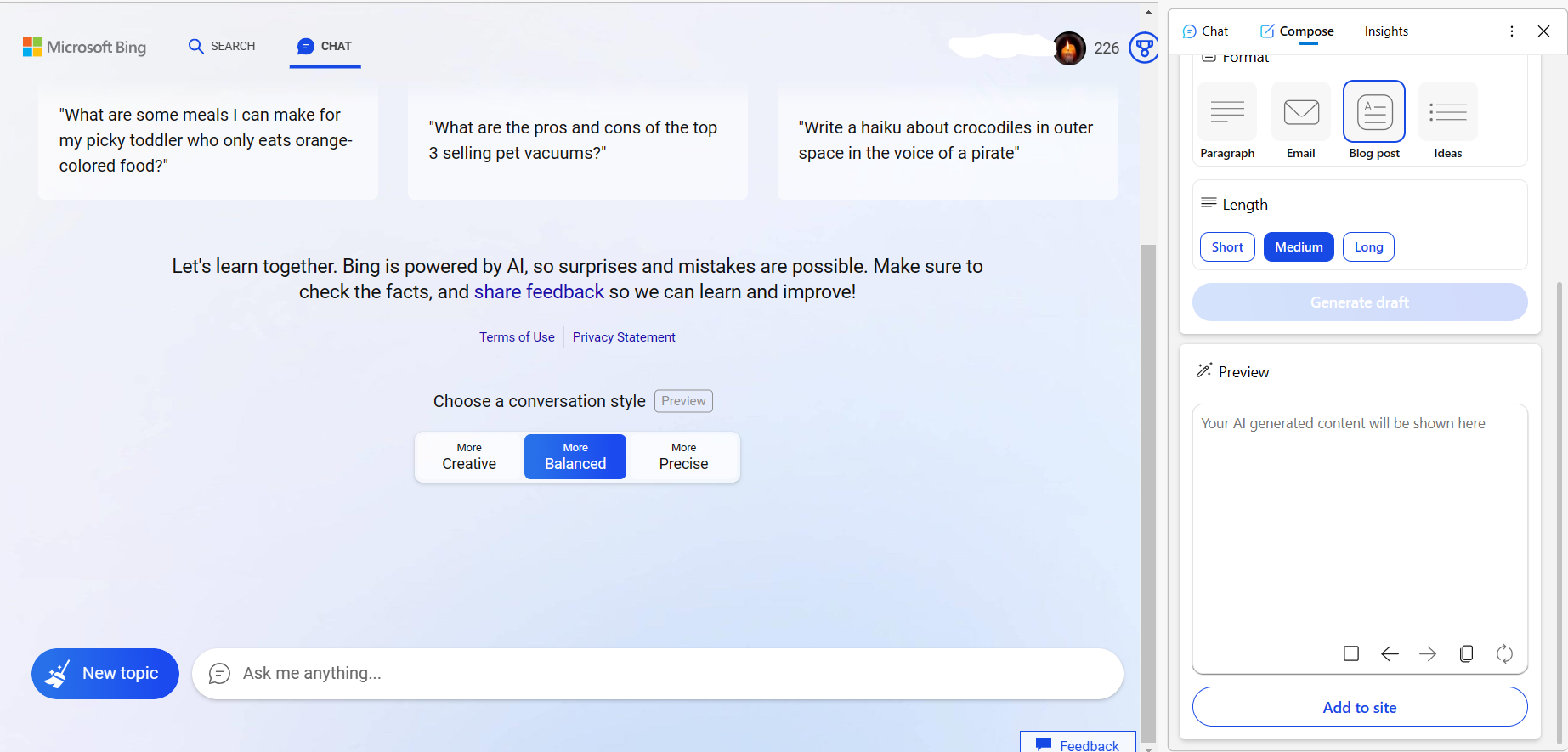
How to use chat GPT 4 for free (Microsoft Bing)

To use chat GPT 4 for free on Microsoft Bing, simply go to the Bing homepage and click on the chat icon in the top right corner of the screen. From there, you can enter any text or input you’d like, and chat GPT 4 will reply with a relevant response within seconds. You can also use emojis, images, or other media as inputs for chat GPT 4 by clicking on the attachment icon on the bottom right corner of the chat box. To end the conversation, type “bye” or click on the cross icon in the top right corner of the chat window.

What are the benefits of using chat GPT 4 for free on Microsoft Bing?

Using chat GPT 4 for free on Microsoft Bing has many benefits. It allows you to access one of the most advanced AI systems in the world without paying anything or signing up for anything. You can chat with an AI system that can understand your natural language inputs and produce natural language outputs that are relevant, informative, and engaging. You can explore various topics and domains, ask chat GPT 4 to generate creative content for you, test its knowledge and reasoning abilities, and have fun and learn something new in the process.

What are the limitations of using chat GPT 4 for free on Microsoft Bing?

However, using chat GPT 4 for free on Microsoft Bing also has some limitations and risks. Chat GPT 4 is not perfect and may sometimes produce inaccurate, irrelevant, or inappropriate responses. It may not be able to answer all your questions or requests, may not be able to handle complex or long inputs or outputs, may not be able to maintain a consistent or coherent conversation over multiple turns, and may not be able to respect your privacy or preferences.

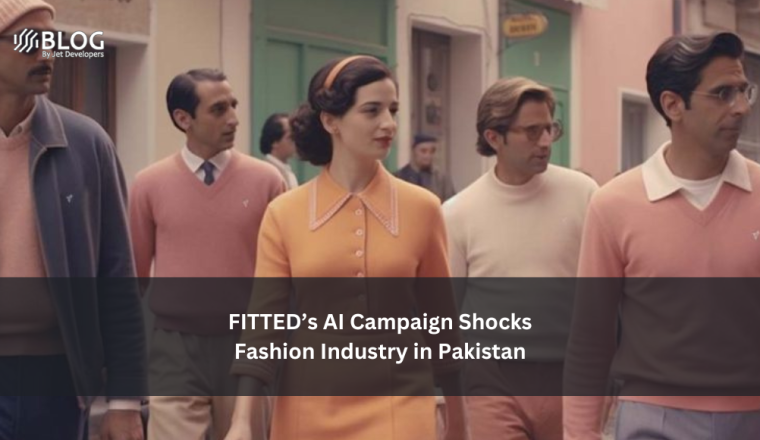
FITTED’s AI Campaign Shocks Fashion Industry in Pakistan

Artificial intelligence, or AI, is a rapidly growing field that is transforming the way we live and work. With the exponential increase in computing power and the availability of large datasets, AI has made remarkable strides in recent years, enabling breakthroughs in areas like self-driving cars, medical diagnosis, and natural language processing. While AI is potentially revolutionizing other industries, it now has shown its power in the fashion industry too.

The fashion industry is always pushing the boundaries of creativity, boldness, innovation and avant-garde, though now it seems they are also pushing the boundaries of technology. FITTED, typically known as a men clothing brand in Pakistan, has recently launched a complete campaign using artificial intelligence. The innovative approach to launch this specific campaign has shocked the fashion world and gotten everybody to talk about it.

FITTED’s AI-generated campaign has created a lot of buzz in the Pakistani fashion industry, as it marks a significant milestone in the use of technology in fashion marketing. The campaign has been widely discussed on social media platforms, with many people expressing their admiration for the brand’s innovative approach to content creation. The use of AI in the campaign has generated a lot of interest, as it demonstrates how technology can be leveraged to create visually stunning campaigns that strike a chord with the target audience. The campaign has also sparked conversations about the potential of AI in the fashion industry and how it can be used to create more personalized and engaging experiences for consumers. Overall, FITTED’s AI campaign has generated a lot of excitement and interest in Pakistan’s fashion industry and beyond.

The campaign was launched on social media platforms and included a series of images and videos featuring models dressed in the brand’s latest collection. The difference this time was that the campaign was entirely created using AI. The brand’s creative team collaborated with AI experts to develop an algorithm that could create fashion content to appeal to their target audience. The integration of AI into the fashion industry is rapidly transforming the way fashion brands market their products. This new approach to content creation has opened up exciting new possibilities for designers and marketers alike, allowing them to leverage the power of machine learning to create visually stunning campaigns that resonate with consumers on a deeper level.

The AI algorithm used by FITTED has analyzed data such as social media engagement, search trends, and online shopping behavior to understand what kind of fashion content would be most effective. It then generated images and videos that incorporated these insights, resulting in a campaign that was highly targeted and personalized. The campaign’s success is a testament to the power of collaboration between creative professionals and AI experts, as they work together to develop algorithms that can generate engaging content that is tailored to the target audience’s preferences.

The use of AI in the fashion industry is not new, but FITTED’s approach is a game-changer. Most brands use AI to improve the customer experience, such as personalized recommendations or virtual try-on tools. However, FITTED’s campaign shows that AI can also be used to create compelling and engaging content that resonates with the target audience. Another advantage of using AI in this way is that it allows brands to be more targeted in their approach. The AI algorithm used by FITTED analyzed data from social media and online shopping behavior to understand what kind of content would be most effective which resulted in a campaign that was highly personalized and tailored to the brand’s target audience.

However, there are also concerns about the use of AI in the fashion industry. Some experts argue that it could lead to a loss of creativity and originality, which definitely is a threat. If brands rely too heavily on AI-generated content, they may end up producing generic and uninspired campaigns, along with a potential risk of perpetuating harmful stereotypes and biases. If the AI algorithm is not trained correctly, it could produce content that reinforces gender, race, or size stereotypes. It is crucial for brands to ensure that they are using AI responsibly and ethically, and it can be openly claimed that FITTED, for this campaign, has played very smart.

In conclusion, FITTED’s use of AI in this specific campaign marks a significant milestone in the fashion industry, as it showcases how technology can push creative boundaries and bring new levels of innovation to the field. FITTED’s AI-generated campaign has set a new standard for creativity and innovation in the fashion industry. By using AI to create a complete campaign, FITTED has shown that technology can be used to produce compelling and engaging content that resonates with the target audience. However, while AI has the potential to revolutionize fashion marketing, it is crucial for brands to use this technology in an ethical and responsible manner. Brands must be mindful of the potential biases that can be perpetuated through AI-generated content and ensure that they are not reinforcing harmful stereotypes or discriminating against marginalized groups. The future of fashion is undoubtedly a fusion of technology, creativity, responsible innovation and FITTED’s campaign is just the beginning.

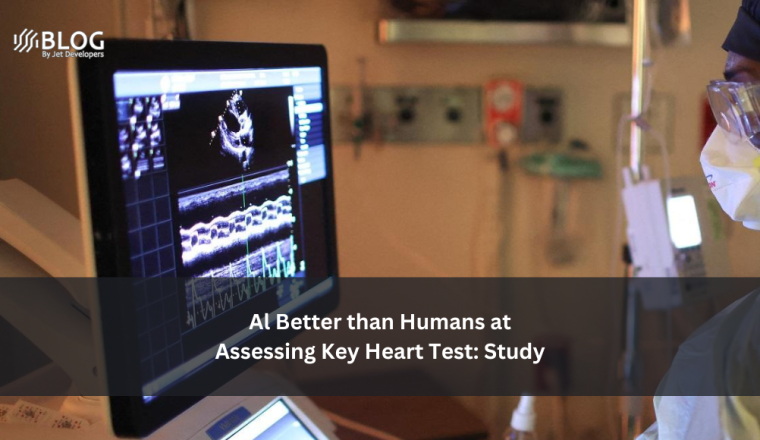
Al Better than Humans at Assessing Key Heart Test Study

PARIS — Artificial intelligence is better than humans at assessing heart ultrasounds, the main test of overall cardiac health, the most rigorous trial yet conducted on the subject found on Wednesday.

While previous research has illustrated the potential power of AI models for reading medical scans, the authors of the new US study said it is the first blinded, randomized clinical trial for heart health.

“There’s a lot of excitement around AI,” but rigorous evaluation remains critical, the study’s senior author David Ouyang told AFP.

This successful trial “really strengthens the argument that now we’re ready for primetime,” added the cardiologist at the Cedars-Sinai Medical Center in Los Angeles.

Heart ultrasounds, also known as echocardiograms, are carried out on patients by sonographers, who usually give an initial assessment of the scan before handing it over to a cardiologist.

The new study, published in the journal Nature, pitted an AI model against sonographers to see who would give the most accurate initial assessment.

Both assessed the ultrasound for what is called left ventricular ejection fraction, which measures the heart’s ability to pump blood out to the body in the space of a heartbeat.

The test is the main way to measure how well a heart is functioning. It is used to tell if patients have had a heart attack or if they will be able to undertake serious treatments such as implanting a defibrillator.

For the study, nearly 3,500 heart ultrasounds were randomly split between sonographers and the AI model.

Their assessments were then evaluated by cardiologists, who did not know which ones came from humans and which from the AI model.

‘Exciting’

The cardiologists made a substantial change in more than 27 percent of the sonographer assessments—and in nearly 17 percent of those done by the AI model, the study found.

“The AI was faster, more precise, and indistinguishable by the cardiologists,” Ouyang said.

There is a “tremendous shortage” of sonographers in the United States and across the world, and this would save them valuable time, he added.

The AI model, called EchoNet-Dynamic, was trained on nearly 145,000 echocardiograms and uses what is called deep learning to process large amounts of data.

The researchers are currently applying for the method to be approved by the Federal Drug Administration, and hope to do the same in the European Union and elsewhere soon, Ouyang said.

Patricia Pellikka, a cardiologist at the Mayo Clinic in the United States not involved in the research, told AFP the study was “exciting” and that the integration of AI tools will increase efficiency and standardization.

French cardiologist Florian Zores said that the study was well conducted but the technology would not be as useful in France, where cardiologists give the initial assessments of heart ultrasounds. — Agence France-Presse

Google Search to add Al Chat Feature

Google’s CEO has said it plans to include Chat AI in its search product.

Conversational AI features will be added to Google’s search engine, Alphabet CEO Sundar Pichai confirmed to The Wall Street Journal, as the tech giant ramps up its artificial intelligence efforts. Pichai countered the idea that ChatGPT and other bots pose a threat to its core search business by saying, “The opportunity space, if anything, is bigger than before.” The AI race is unfolding as Google faces pressure to cut costs while increasing productivity, with WSJ reporting that Pichai “wouldn’t directly address” the prospect of more staffing cuts following January’s layoff announcement affecting 12,000 people.

Google CEO Sundar Pichai for an interview on Tuesday. A few takeaways: – Sundar doesn’t think search and AI-powered chatbots are a zero-sum game. “The opportunity space, if anything, is bigger than before,” he said. – Google users will be able to interact directly with conversational artificial-intelligence models (“LLMs”) in search. It could take a few different forms, but one possibility is giving users the ability to ask follow-up questions to their original queries. – There’s more juice to squeeze to reach the 20% productivity gains Sundar outlined last year. “We are pleased with the progress, but there is more work left to do,” he said. – Sundar acknowledged Google sped up its long-running work on chatbots following the release of ChatGPT. “We were iterating to ship something, and maybe timelines changed, given the moment in the industry”.

As Per Google: It’s AI Supercomputer Is Faster And Greener Than The Nvidia A100 Chip

Alphabet Inc’s Google on Tuesday released new details about the supercomputers it uses to train its artificial intelligence models, saying the systems are both faster and more power-efficient than comparable systems from Nvidia Corp.

Google has designed its own custom chip called the Tensor Processing Unit, or TPU. It uses those chips for more than 90 per cent of the company’s work on artificial intelligence training, the process of feeding data through models to make them useful at tasks like responding to queries with human-like text or generating images.

The Google TPU is now in its fourth generation. Google on Tuesday published a scientific paper detailing how it has strung more than 4,000 of the chips together into a supercomputer using its own custom-developed optical switches to help connect individual machines.

Improving these connections has become a key point of competition among companies that build AI supercomputers because so-called large language models that power technologies like Google’s Bard or OpenAI’s ChatGPT have exploded in size, meaning they are far too large to store on a single chip.

The models must instead be split across thousands of chips, which must then work together for weeks or more to train the model. Google’s PaLM model – its largest publicly disclosed language model to date – was trained by splitting it across two of the 4,000-chip supercomputers over 50 days.

Google said its supercomputers make it easy to reconfigure connections between chips on the fly, helping avoid problems and tweak for performance gains.

“Circuit switching makes it easy to route around failed components,” Google Fellow Norm Jouppi and Google Distinguished Engineer David Patterson wrote in a blog post about the system. “This flexibility even allows us to change the topology of the supercomputer interconnect to accelerate the performance of an ML (machine learning) model.”

While Google is only now releasing details about its supercomputer, it has been online inside the company since 2020 in a data centre in Mayes County, Oklahoma. Google said that startup Midjourney used the system to train its model, which generates fresh images after being fed a few words of text.

In the paper, Google said that for comparably sized systems, its supercomputer is up to 1.7 times faster and 1.9 times more power-efficient than a system based on Nvidia’s A100 chip that was on the market at the same time as the fourth-generation TPU.

Google said it did not compare its fourth-generation to Nvidia’s current flagship H100 chip because the H100 came to the market after Google’s chip and is made with newer technology.

Google hinted that it might be working on a new TPU that would compete with the Nvidia H100 but provided no details, with Jouppi telling Reuters that Google has “a healthy pipeline of future chips.”

Will AI-detection tools falsely accuse students of cheating? Universities are worried

The service, launched on Tuesday, can identify AI-generated text with 98% accuracy. In contrast, OpenAI’s plagiarism detection system works only 26% of the time.

According to Turnitin’s CEO, Chris Caren, the new tool was developed in response to educators’ request to detect AI-written text accurately. “They need to be able to detect AI with very high certainty to assess the authenticity of a student’s work and determine how to best engage with them,” Caren explained.

However, the launch of the new tool has been met with mixed reactions. Some institutions, including Cambridge and other members of the Russell Group, representing leading UK universities, have announced their intention to opt out of the new service.

False positives

There are concerns that the tool may falsely accuse students of cheating. In addition, it involves handing student data to a private company and prevents people from experimenting with new technologies such as generative AI.

As a result, the UCISA, a UK membership body supporting technology in education, has worked with Turnitin to ensure universities can opt out of the feature temporarily. The American Association of Colleges and Universities has also expressed “dubiousness” over the detection system, given rapid developments in AI.

Deborah Green, CEO of UCISA, expressed concern that Turnitin was launching its AI detection system with little warning to students as they prepared coursework and exams this summer. While universities have broadly welcomed the new tool, Green added that they need time to assess it.

Impact on lecturers and universities

Lecturers worried they wouldn’t know why essays have been flagged as being written by AI. In a single university, an error rate of 1% would mean hundreds of students wrongly accused of cheating, with little recourse to appeal, warned Charles Knight, assistant director at consultancy Advance HE.

While Turnitin has not immediately responded to a request for comment on the concerns raised about the AI detection tool, the company stated that the technology had been “in development for years” and provided resources to “help the education community navigate and manage [it]”.

The new tool’s launch has sparked a debate among academics, higher education consultants, and cognitive scientists worldwide over how universities might develop new modes of assessment in response to AI’s threat to academic integrity.

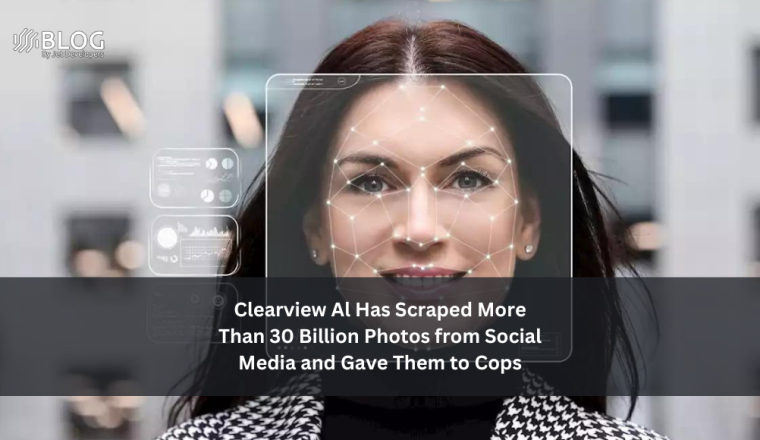
Clearview Al Has Scraped More Than 30 Billion Photos from Social Media and Gave Them to Cops

Clearview AI, a controversial facial recognition company, recently announced that it has scraped more than 30 billion photos from social media platforms. Despite facing multiple setbacks and bans from cities such as Portland, San Francisco, and Seattle, Clearview AI remains undeterred and has continued to grow its database significantly over the last year.

While Clearview AI is no longer able to provide its services to private businesses, it is still being used by more than 2,400 law enforcement agencies in the United States. The company’s CEO claims that police have used Clearview AI’s tools over a million times, and its database of scraped social media images now tops 30 billion.

The company’s AI-powered technology can recognize millions of faces thanks to images uploaded to social media. However, this technology has been met with widespread criticism due to concerns over privacy and the potential for misuse. Around 17 cities have banned the use of Clearview AI, but law enforcement agencies seem more than happy to use the platform.

The Miami Police Department recently confirmed that it uses Clearview AI regularly, which is a rare admission by law enforcement. The fact that law enforcement agencies are willing to use this technology despite the controversy surrounding it raises concerns about the impact it could have on civil liberties and human rights.

While facial recognition technology can be useful in certain situations, such as identifying criminals or finding missing persons, its potential for misuse is significant. Clearview AI’s massive database of scraped social media images is a prime example of how technology can be used to infringe on privacy rights. As this technology continues to evolve, it is important that we have a discussion about its use and potential impact on society.

AI-Generated Code Will Replace Human Programmers Within the Next 5 Years

During a recent interview with Eric Sheridan, the senior U.S. internet analyst at Goldman Sachs Research, Emad Mostaque, CEO of Stability AI, made some bold predictions about the future of AI and its impact on society. He compared AI to a highly gifted intern with poor recall, stating that if the memory problem is resolved, AI might be prepared for promotion to the analyst or associate-level employment.

According to Mostaque, programmers may be replaced by AI in just five years. He cited the fact that AI is now producing software code successfully, to the point that it generates 41% of all new software code on GitHub. This speed of disruption is “terrifying,” he said, describing AI as a “far bigger disruption than the pandemic.”

Mostaque also predicted that AI would soon have a significant impact on various sectors of society, including entertainment, education, medicine, and of course the IT industry. He reminded the audience that AI massive language models are already successfully producing software code, stating that “this is a much bigger disruption than the pandemic.”

Despite being a non-specialized model, Mostaque claimed that OpenAI’s ChatGPT could pass Google’s test for a high-level software engineer. He projected that there would be no programmers in five years, and while this offers the potential to increase production and efficiency, it also raises concerns about job security in fields that previously seemed secure.

While there are undoubtedly challenges associated with the development of AI, Mostaque believes that the benefits it brings will ultimately outweigh the risks. As AI continues to evolve and become more sophisticated, we can expect to see it play an increasingly important role in shaping the future of society.

U.S. President puts pressure on tech giants over AI

U.S. President Joe Biden has called on tech companies to ensure the safety of AI products before releasing them to the public. Biden emphasized the need for appropriate safeguards to protect society, national security, and the economy from potential risks associated with AI. Social media is cited as an example of the negative impact of powerful technologies in the absence of safeguards. U.S. President Joe Biden has called on leading technology companies to ensure their products are secure before releasing them to the public, amidst growing concerns over the safety of artificial intelligence (AI). Speaking at a meeting with science and technology advisers on April 4, Biden highlighted the importance of addressing potential risks to society, national security, and the economy.

U.S. President on social media’s negative impact on AI

During the meeting, Biden cited social media as an example of the negative impact that powerful technologies can have when appropriate measures to protect against them are not in place. He said: Absent safeguards, we see the impact on the mental health and self-images and feelings and hopelessness, especially among young people.

He also emphasized the need for non-partisan privacy laws that limit the personal data gathered by technology firms, prohibit child-targeted advertising, and prioritize health and safety in product development.

Biden’s comments come amid growing concerns about the safety and ethical implications of AI, as the technology continues to develop rapidly. The ability to swiftly and effectively collect and analyze enormous amounts of data has been a significant contributing factor in the development of AI.

Also, the demand for automated systems that can complete activities that are too risky, challenging or time-consuming for humans, as well as the accessibility of enormous amounts of digital data, have also driven the development of AI.

Ethics and safety concerns drive AI research

However, societal and cultural issues have also influenced the development of AI. Discussions concerning the ethics and the ramifications of AI have arisen in response to worries about job losses and automation.

Concerns have also been raised about the possibility of AI being employed for malicious purposes, such as cyberattacks or disinformation campaigns. As a result, many researchers and decision-makers are attempting to ensure that AI is created and applied ethically and responsibly.

AI is being increasingly utilized in a variety of modern-day applications, from virtual assistants to self-driving cars, medical diagnostics, and financial analysis. Researchers are also exploring novel ideas like reinforcement learning, quantum computing, and neuromorphic computing.

One important trend in modern-day AI is the shift toward more human-like interactions, with voice assistants like Siri and Alexa leading the way. Natural language processing has also made significant progress, enabling machines to understand and respond to human speech with increasing accuracy.

The recently developed ChatGPT is an example of AI that can understand natural language and generate human-like responses to a wide range of queries and prompts.

President Biden’s call for tech companies to prioritize the safety and ethical implications of AI underscores the need for a comprehensive approach to regulating and implementing the technology. While AI presents numerous benefits, it also poses significant risks that must be addressed through responsible and ethical development and implementation.