OpenAI’s Big Move: Codex Comes to macOS
Artificial intelligence is no longer just helping developers write code — it’s reshaping the entire software development process. What once required hours of manual effort is now increasingly handled by swarms of AI agents and sub-agents working behind the scenes. As developers explore new ways to collaborate with AI, even the most advanced AI labs are finding it difficult to keep pace with how fast things are moving. One of the biggest shifts right now is toward agentic software development. In this approach, AI agents don’t just assist — they work independently on coding tasks, making decisions and executing work with minimal human input.
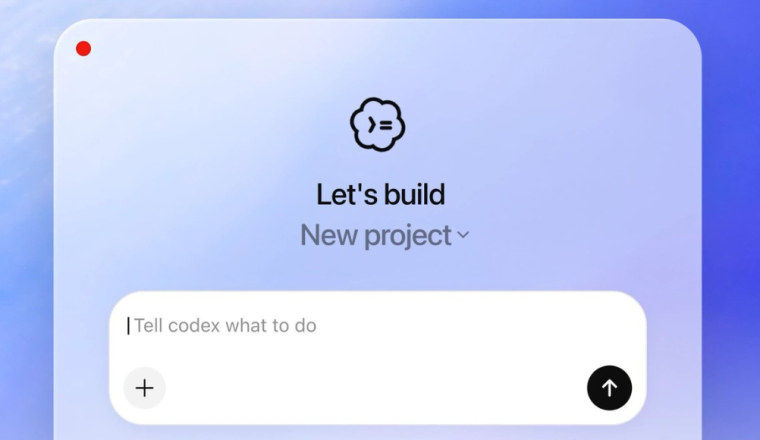
OpenAI is now taking a significant step forward. On Monday, the company launched a new macOS app for Codex, designed to fully embrace modern agentic workflows.
The new app supports:
- Multiple AI agents working in parallel
- Advanced agent skills and shared state
- Modern, flexible workflows inspired by the last year of experimentation in AI coding tools
This release follows closely on the heels of GPT-5.2-Codex, OpenAI’s most powerful coding model to date, launched less than two months ago. The company clearly hopes this combination of power and usability will persuade developers currently using Claude Code to switch.
“If you really want to do sophisticated work on something complex, 5.2 is the strongest model by far,”
— Sam Altman, CEO of OpenAI
Altman also acknowledged that raw capability isn’t enough — usability matters. The new macOS app aims to make that power easier and more flexible to access.
New Features Designed for Real Developers
Beyond raw performance, the Codex macOS app introduces features aimed at matching — or even surpassing — competing tools:
- Background automations that run on a schedule
- A review queue for completed tasks
- Customizable agent personalities, ranging from pragmatic to empathetic, to suit different working styles
These features are designed to reduce context switching and help developers stay focused on higher-level thinking.
For OpenAI, the biggest advantage isn’t just intelligence — it’s speed.
“You can use this from a clean sheet of paper to build something genuinely sophisticated in just a few hours,” Altman explained.
“As fast as I can type new ideas, that’s the limit of what can get built.”
This vision captures where software development is heading: a future where human creativity sets the pace, and AI handles the heavy lifting.
What do you think — will fully agentic coding tools replace traditional development workflows, or will human-AI collaboration always need a strong human hand at the center?