WordPress Ad Banner

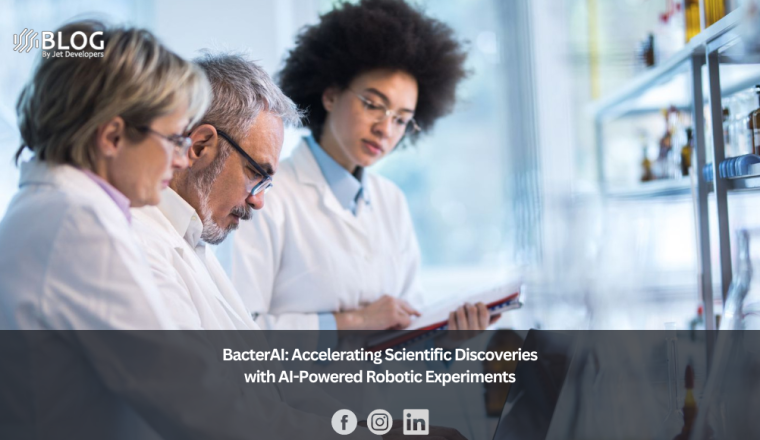
BacterAI: Accelerating Scientific Discoveries with AI-Powered Robotic Experiments

A groundbreaking achievement by a group of scientists has given birth to an artificial intelligence (AI) system that empowers robots to independently conduct up to 10,000 scientific experiments in a single day.

Named BacterAI, this AI system has the potential to revolutionize the pace of discovery across various fields including medicine, agriculture, and environmental science. In a recent publication in Nature Microbiology, the research team showcased the successful implementation of BacterAI in mapping the metabolic processes of two oral health-related microbes.

Unveiling the Amino Acid Requirements for Microbial Growth

Led by Professor Paul Jensen at the University of Michigan, the research team aimed to uncover the specific amino acid requirements for the growth of beneficial mouth microbes.

However, due to the immense number of potential combinations arising from the 20 available amino acids, determining the precise combination for each bacterial species presented a formidable challenge.

To overcome this obstacle, BacterAI was developed to test hundreds of amino acid combinations each day and adapt its approach based on the previous day’s outcomes. In just nine days, BacterAI successfully predicted the necessary amino acid combinations for growth with 90% accuracy.

Accelerating Discoveries through Automated Experimentation

The implications of automated experimentation and the utilization of BacterAI extend far beyond the realm of microbiology, as researchers from diverse fields can now formulate questions as puzzles for AI to solve through trial and error.

It is important to note that approximately 90% of bacteria remain largely unexplored, and conventional methods of acquiring fundamental scientific knowledge about them demand significant time and resources. The rapid pace of automated experimentation facilitated by BacterAI has the potential to accelerate these discoveries, paving the way for future breakthroughs in various domains.

BacterAI stands out as an exceptional innovation in the field of AI due to its ability to generate its own dataset through a series of experiments, diverging from the conventional approach of feeding labeled datasets into machine learning models.

The platform leverages the outcomes of prior trials to make predictions about experiments that yield the most significant amount of information. With fewer than 4,000 experiments, BacterAI has already deciphered most of the rules governing the precise feeding of bacteria.

Under the guidance of Professor Paul Jensen, the development of BacterAI represents a remarkable leap forward in harnessing AI to expedite scientific discovery. As demonstrated by the team’s research, BacterAI provides crucial insights into the microbial world, including those impacting our health.

With robots now capable of conducting up to 10,000 experiments per day, the potential for BacterAI to accelerate discoveries is immense. The study received funding from the National Institutes of Health, with support from NVIDIA, further highlighting the significance of this groundbreaking advancement.

Godfather of AI Warns: ChatGPT-like Tech Poses a Greater Threat than Climate Change

AI Pioneer Geoffrey Hinton Warns: Artificial Intelligence Poses a Graver Threat than Climate Change. Renowned as one of the pioneers in the field of artificial intelligence, Geoffrey Hinton recently gave an eye-opening interview to Reuters, shedding light on the various dangers associated with the technology. In a thought-provoking statement, Hinton suggested that AI could potentially pose a greater threat than even climate change.

Having left Alphabet, Hinton expressed his desire to openly discuss the potential consequences of AI without reservation. While acknowledging the significance of climate change, he emphasized the more immediate perils posed by AI.

“I don’t intend to undermine the gravity of climate change. I don’t want to imply that we should ignore climate change. It is indeed a colossal risk,” Hinton stated. “However, I believe the urgency of AI may surpass that.”

Hinton elaborated on his viewpoint, highlighting the contrasting nature of addressing these two global challenges. “When it comes to climate change, the solution is relatively straightforward: we must halt carbon emissions. If we achieve that, the situation will eventually improve. In the case of AI, though, it is far from clear what steps should be taken,” he explained.

A powerful open letter

In April, a resounding call for action reverberated through the tech industry as thousands of influential figures and tech leaders signed an open letter. The letter urged for a six-month pause in the development of systems that surpass the capabilities of OpenAI’s recently unveiled GPT-4.

While Geoffrey Hinton, a pioneering figure in the field of artificial intelligence, acknowledged sharing the concerns expressed by the signatories, he disagreed with the idea of a research pause, considering it an unrealistic solution.

“I firmly believe this is an existential risk, and it is imminent. Hence, we should be working tirelessly at this moment, dedicating substantial resources to understand and address this issue,” Hinton explained.

Responding to the open letter, a committee of lawmakers from the European Union called on U.S. President Joe Biden to convene a global summit to chart the future direction of AI. European Commission President Ursula von der Leyen joined the call for a collective discussion.

As a result of these developments, the committee recently proposed a groundbreaking set of regulations targeting generative AI. Among the proposals is the requirement for AI companies to disclose any copyrighted material used in training their models.

Hinton commended President Biden’s initiative to engage in talks with AI company leaders, emphasizing the importance of transparency in their systems. He stressed that both tech leaders and politicians should be actively involved in addressing this issue.

“The tech leaders possess the best understanding of the situation, and the politicians must be engaged,” Hinton conveyed to Reuters. “The impact of AI affects us all, thus necessitating collective thought and action.”

Khan Academy Envisions AI as a Supportive Guide for Students, Not a Tool for Cheating

Khan Academy, renowned for its innovative approach to digital education and its commitment to providing equal opportunities, is now focusing on harnessing the potential of artificial intelligence to serve as a supportive guide for students.

According to Fast Company, Sal Khan, the founder of Khan Academy, was introduced to OpenAI’s GPT software during a private demonstration by Sam Altman and Greg Brockman, CEO and president of OpenAI, respectively. Khan was greatly impressed by the program’s intelligent responses to academic questions.

Enthralled by its capabilities, Khan dedicated numerous nights to explore the AI model, formulating prompts that mirrored the inquiries of eager learners. “I spent sleepless nights, molding it into a tutor, experimenting with various personas, and developing lesson plans,” Khan revealed.

While students may have already incorporated AI technologies like ChatGPT into their learning routines, often facing restrictions, Khan Khan emphasizes the potential of such tools when used ethically and responsibly.

Khanmigo- AI(m) to learn.

Rather than have students access ChatGPT— developed with a general, conversational purpose— Khan Academy developed Khanmigo, a chatbot designed to guide students through math problems and code and even engage in conversation in the voices of characters like Hamlet.

Khanmigo can appear alongside existing videos and assignments and carefully reason through a problem rather than simply spitting out an answer when students ask.

“We’ve prompted our way so that Khanmigo has a humility about it,” said Khan. “It actually doesn’t say ‘You’re wrong,’ it says ‘That’s not what I got, can you explain your reasoning?’”

Khanmigo can also spot errors with programming code faster than most human instructors would and then lead students in the right direction rather than telling them if they’re right or wrong. 

Although the AI model isn’t 100% accurate yet with math, Khan says the accuracy ramps up drastically when prompted to explain its work before presenting the student with an answer. “It’s not perfect, but it’s still pretty magical at the same time.”

With a second AI monitoring interactions to make sure conversations don’t go anywhere “shady” and training to refuse if prompted by students to do their homework for them, Khanmigo is armed with the tools to shut down unwanted conversations and even notify parents and teachers.

In line with its history.

Khanmigo is currently being tested with a handful of schools and districts and is in line to be open to a wider beta this summer. Individuals can enter a wait list to try Khanmigo but will have to commit to donating at least $20 per month upon selection for now. 

Founded in 2006, Khan Academy has been priceless, helping millions of students around the globe gain knowledge and improve themselves academically. Their approach of providing free yet top-quality videos and content curated by experts that are easy to understand has gained them nothing short of praise.

Sal Khan envisions Khanmigo growing with features like coaching students on writing, moderating debates, and even becoming the interface people use to interact with Khan Academy.

AI Could Co-Pilot Planes, Reveals Emirates Airline President

Airline Industry Considers AI Pilots to Overcome Crew Shortages and Cut Costs, But Will Passengers Accept It?

As artificial intelligence (AI) advances, airlines are considering the possibility of replacing one of the pilots in the cockpit with computing technology. This move could help them tackle crew shortages and reduce costs. However, the question remains whether passengers would be comfortable with this change.

According to Emirates President Tim Clark, AI is poised to have a significant impact on the aviation industry, with single-pilot planes becoming a possibility, CNBC reported on Tuesday. “You’ve got to take time to look at what this [AI] could do to improve what you do,” Clark said.

For many of us who have grown accustomed to seeing two or even three pilots in the cockpit for long-haul flights, the idea of a single AI pilot might come as a shock. However, for the airline industry, reducing human dependency as technology improves is becoming the norm.

Back in the 1950s, there was a five-member crew in the cockpit with a navigator, flight engineer, and radio operator part of the ensemble required to fly a plane. This is where the terms captain and first officer were also used. As technology improved, the three members of the crew lost their seats, and the time has now come for one of the pilots to lose theirs too.

Can planes fly without a pilot or two?

The two-pilot mandate in flights is crucial for bringing redundancy into the flying operation in case one of the pilots becomes incapacitated to fly the plane. With improving technology, though, artificial intelligence could be used to even land the plane at a preselected airport in case of an emergency.

Planes already use computers to automate a lot of tasks, and Autopilots control the aircraft for a large duration of flights anyway, with the pilots overseeing operations. Airlines and plane manufacturers are now exploring whether AI could be assigned a greater role in flight operations, with only one human needed for oversight.

One is unlikely to see one pilot flight anytime soon in the future, but there is definitely scope to experiment with two pilot long-haul flights with AI at the controls and pilots alternating rest periods in the cabin.

Experiments in solo flying could also begin by allowing one of the pilots to rest in the cabin while the other oversees flight with the aid of the AI. The U.S. military trailed AI-piloted flights earlier this year. Another method that could be deployed is using help from a ground station for take-off and landing tasks, while the rest of the flight is overseen by a single pilot.

Pilots, however, are not convinced. Past incidents have shown that when things go south well trained and rested pilots can land airplanes safely, even on a river, something AI would likely not attempt.

Autonomous air taxis could perhaps help change public perception about the need for pilots to fly an aircraft. But will the airline industry wait that long to remove redundancies in the cockpit? The rise in AI’s capabilities suggests no.

The report contains information that appeared in FortuneCNBC.

AI Will Unlock a New Level of Human Potential

In the artificial intelligence (AI) space, there’s a lot of fear-mongering happening these days, particularly with the rise of ChatGPT, Google’s Bard, and Stability AI. These conversational, generative, and other AI models are predicted to fundamentally alter how we live and work.

While it may be true, AI will not take away our jobs or destroy the world, which is a concern shared by 37% of Americans. If we can embrace AI, it will liberate us from repetitive mental work, unlock new professional opportunities, and unleash our creativity. This substantial technological leap will play a significant role in propelling human progress and expanding our economies.

Change your perspective on AI

AI can be compared to the steam engine for the human mind. Just like the steam engine, people were afraid that AI might replace them, but instead, it increased productivity, created more jobs, and improved wages, leading to a larger middle class.

The combination of humans and machines is what makes us stronger. According to research, 90% of employees are currently engaged in repetitive and uninteresting tasks, and AI can help free us from these tasks, making us more efficient.

Every successful technology ever invented has made people stronger. For example, the invention of the car made us move faster, while the cell phone enabled us to communicate with people far away at the speed of light. Additionally, 93% of Americans rely on Google’s auto-correct feature, which has greatly improved non-native English speakers’ language skills.

AI advancements will open up a whole new world for humanity. As Google CEO Sundar Pichai said at the 2018 World Economic Forum, “AI is probably the most important thing humanity has ever worked on. I think of it as something more profound than electricity or fire.” It’s time to embrace AI and let it help us achieve what was once thought to be impossible.

AI and the future of work

In the past, middlemen played a vital role in the workplace. Think of a company that answered the phone and arranged for a taxi. But with Uber and Lyft, the middle person is no longer needed. Similarly, aspiring actors and singers used to have to attend numerous auditions to make it big. Today, platforms like YouTube and TikTok have given everyone the opportunity to become famous without going through the traditional channels. The rise of NFTs may also disrupt the art world, making galleries less relevant in the future.

All of these examples show that technology is empowering people to reach new heights professionally. Dell Technologies predicts that 85% of the jobs in 2030 have not been invented yet, and businesses and workers must shift to a skills-based approach to remain competitive. This means learning how to use technologies like AI, which can drive efficiency, productivity, and profitability.

We’re already seeing the benefits of AI. Although GPT-4 and ChatGPT are still in their early stages, they have proven useful for code developers and have brought AI to non-technical individuals. The potential is enormous. Imagine using a chatbot to respond to all your work emails or to summarize a long report with key points. AI can also eliminate the need to train people to do certain tasks. Instead, we can train them on how to use AI tools to create presentations, conduct analyses, and write reports.

Stability AI is disrupting the motion picture industry by synthesizing backgrounds, faces, costumes, and other assets, making it possible to produce movies without having to go on location. AI is also going to democratize professions that were previously hard to reach, completely change the education system, and revolutionize the way we work. With AI, the professional skills of the future will be about training computers to arrive at the correct answer or outcome, rather than programming them. Soon, our children may no longer need to learn how to spell, compose an essay, or drive a car, but rather how to harness the power of AI to solve problems and create new possibilities.

The possibilities of AI

As humans, we have always craved progress. We are where we are today because we have been open-minded and have an innate learning-first attitude that has enabled us to learn and adapt to new situations and ways of being. AI realizes a level of efficiency and proficiency that is completely unmatched. We must be open-minded to the endless possibilities it may present in the coming years. Yes, it will change how we live and work, but fear not, it will be in the most positive and profound ways.

Slack Report: Lack of AI and Automation Adoption Hinders Employee Productivity

A new report from Slack has revealed that many companies are not leveraging technologies like artificial intelligence (AI) and automation to their fullest extent, which could unlock new levels of employee productivity. The Slack State of Work report surveyed more than 18,000 desk workers worldwide and found that only 23% of companies invest in technology to improve productivity, and a mere 27% use AI tools to achieve this goal.

The study also showed that many organizations still operate with outdated work practices, tools, and approaches that prevent employees from reaching their full potential. This is a clear indication that companies need to adopt new technologies and take a more holistic approach towards productivity.

According to Christina Janzer, SVP at Slack research and analytics, many companies are stuck in old ways of thinking about productivity. “Part of the confusion comes from a growing schism between leaders and teams over how to properly define and measure productivity in today’s environment,” she told VentureBeat. “Organizations need to take a more holistic approach, and that includes enabling employees to experiment with tools and technology to drive better results.”

The report aims to highlight three trends that are shaping the modern workplace and driving employee productivity: the underutilization of new technologies such as AI and automation, the transformation of office work and design in the era of hybrid work, and the direct influence of employee engagement and talent development on productivity.

Slack found that companies that have embraced AI are 90% more likely to report increased productivity levels than those that have not. In addition, the majority of employees surveyed (77%) believe that automating routine tasks, such as obtaining expense report approvals, would enhance their productivity.

Despite this potential, 60% of employees report that their company has not implemented AI tools to support their productivity, and 43% say that their team has not adopted any means of automation to make their work processes more efficient or easier.

“We’re just beginning to tap into the potential of AI at work,” said Janzer. “However, our survey shows a majority of employees are interested in testing it out. Fifty-three percent of workers said using generative AI would improve their productivity, even though most aren’t currently using it at work.”

The worldwide survey was conducted as part of a collaborative effort between experience management platform Qualtrics and Salesforce’s Slack from February 24 to March 21, 2023. The sample size comprised 18,149 individuals from various industries including both desk workers and executives from regions including the U.S. (3,115), Australia (2,034), France (2,039), Germany (2,032), the UK (2,027), India (2,039), Singapore (1,341), Japan (1,658) and South Korea (1,864).

The essence of AI and automation for streamlining productivity

Janzer highlighted that most respondents (77%) acknowledge the benefits of automating repetitive tasks in enhancing productivity. However, the study shows that only 45% of teams have implemented automation to simplify or optimize their work processes.

“That’s a mismatch, and it could cost companies that don’t move quickly to catch up,” she said.

The survey findings indicate that several companies still depend on antiquated methods to enhance productivity and monitor employee performance. Employees spend approximately 32% of their time on tasks that do not align with company objectives.  

“Companies like Stack Overflow look at a blend of inputs and outputs to measure their progress,” said Janzer. “Because, regardless of how much performative work you eliminate, most of us can think of some repetitive work that we do that isn’t valuable but has to be done in our jobs. That’s where AI and automation become extremely valuable.”

Missed productivity gains

Janzer explained that numerous organizations neglect the potential of utilizing AI and automation to optimize and simplify tedious tasks, leading to missed productivity gains. This is significant, as desk workers who have implemented automation report saving up to one month of work per year.

“Companies like LG AI Research in Seoul are using generative AI to improve knowledge workers’ efficiency by automating repetitive tasks, providing insights and recommendations for decision-making, and enabling better collaboration so that their employees can focus on tasks that require human intelligence and creativity,” Janzer added. “We’re learning more about the potential benefits of these tools every day. So, companies who may not have jumped on board yet will want to catch up fast to keep up.”

Slack cited the success of music platform Spotify’s advertising team, which utilized automated workflows to bolster collaboration across account teams. This initiative resulted in a 40% increase in productivity by mitigating the need for frequent meetings and reducing email traffic.

Janzer emphasized that it is crucial to prioritize trust and safety when utilizing AI or any other work tool as we continue to uncover the benefits of these technologies. To support the responsible use of AI among customers Salesforce has developed a strong focus on building tools that prioritize accuracy, safety, honesty, empowerment and sustainability. 

Moreover, Janzer said that Salesforce has established an office of ethical and humane use to address inquiries and apprehensions about the use of technologies, AI included. 

Effective ways to enhance workplace collaboration 

The study shows that one-third of executives track metrics like work hours and email communication, which only 15% of employees perceive as helpful in improving productivity. 

“There’s much more to productivity than inputs alone,” said Janzer. “It’s key to build a culture that measures performance based on results instead of solely tracking inputs like hours worked or emails sent.”

The report also emphasizes the significance of enabling effective hybrid work by providing employees with innovative means to collaborate and communicate. According to the survey, employees require a flexible work schedule (52%), a distinct workspace with more meeting rooms and quiet areas (32%) and superior technology to collaborate from any location (80%) to boost productivity.

However, only 21% of executives are modifying the physical office to enhance productivity, and merely 19% encourage asynchronous work, which assists in reducing meeting times.

The post-pandemic office role

The role of the office has shifted in the post-pandemic world, said Janzer. In the past, the office was the primary location for all work, but now, employees primarily want to use the space to collaborate. 

“The crucial factor is to create workplace policies with purposeful intent,” she added. “That includes defining core collaboration hours, a block of time when teammates are expected to be available for meetings and real-time responses, as well as time when people have more flexibility to work in a way that’s best for them — whether that’s stepping away from their computer to whiteboard, or doing heads-down focus work.”

Janzer mentioned that integrating apps directly into Slack can help teams reduce context switching and complete all their work in a single tool, regardless of their location. Additionally, Slack’s upcoming generative AI feature SlackGPT will allow employees to summarize conversations and huddles, making catching up on unread messages received during working hours easier, especially for distributed teams.

The importance of mental well-being for productivity

Another intriguing finding from the survey was that job satisfaction, engagement and mental wellness are top factors that contribute to productivity. 

As a result, Salesforce recommends that leaders should focus on both productivity and wellness to achieve optimal results and believes that incorporating AI and automation tools can be a critical component in attaining this goal.

“Transparent, two-way conversations between leaders and employees help companies understand how people feel about their work and workload and whether they have the proper environment to thrive, said Janzer. “Setting employees up for success includes creating clarity around expectations, setting up a time for focus work, and adopting the right tools and technology. So, do not overlook the importance of motivating teams to create a healthy and productive environment.”

Meet Pi, A New AI Chatbot for Personal Assistance and Emotional Support

“Hey there, great to meet you. I’m Pi, your personal AI.”

This is the message one is met with when you open Inflection AI’s chatbot, which is the latest addition to a stream of chatbots introduced by big tech companies over the last couple of months.

Called Pi, it’s a ChatGPT-like competitor designed to be a kind and supportive companion assistant.

“My goal is to be useful, friendly, and fun. Ask me for advice, for answers, or let’s talk about whatever’s on your mind.”

Pi stands for ‘Personal intelligence’

Early user feedback suggests that it’s a slower version of ChatGPT. When given a prompt, the green cursor dwindles for a couple of seconds before it coughs up an answer. Unlike with other chatbots, it gives the impression of talking to a chatty friend.

Launched in 2022, Inflection AI is an artificial intelligence startup founded by LinkedIn co-founder Reid Hoffman and Google DeepMind co-founder Mustafa Suleyman.

The startup developed the chatbot technology in-house, keeping in mind human-like conversations with high emotional intelligence. Pi comes at a time when there’s much hype around generative AI, which is driving a surge of investor and consumer interest.

“Pi is a new kind of AI, one that isn’t just smart but also has good EQ. We think of Pi as a digital companion on hand whenever you want to learn something new, when you need a sounding board to talk through a tricky moment in your day, or just pass the time with a curious and kind counterpart, Suleyman told Business Wire.

“We have a lot to learn and a long way to go, but we are excited to bring this first version of Pi to people around the world.”

The chatbot is useful for everyday interactions, but it cannot generate code or essays. When asked, ‘How can I enhance my badminton skills?’ Pi was able to generate a handful of recommendations after having a shot at it.

However, the chatbot was unable to determine who won the 2022 FIFA World Cup. It stated that it was last updated in November 2022 and hence lacked that information. As a result, it has a long way to go in terms of development.

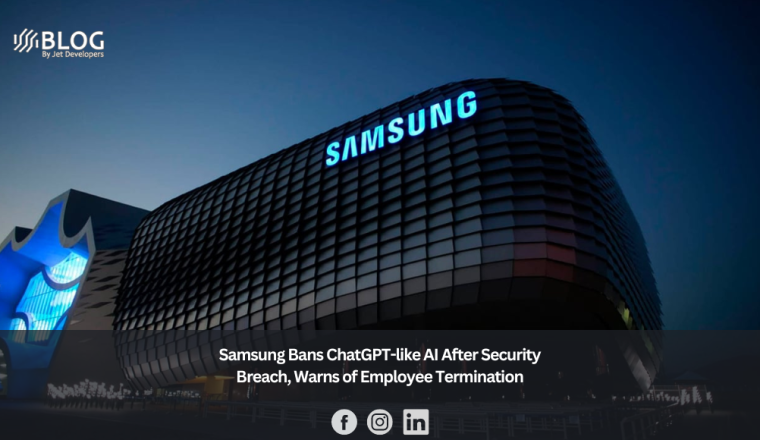
Samsung Bans ChatGPT-like AI After Security Breach, Warns of Employee Termination

Samsung Electronics Co. has prohibited its employees from utilizing generative AI tools, including ChatGPT, Google Bard, and Bing AI, among others. 

Due to worries about the security of crucial code, the tech giant informed personnel at one of its largest divisions about the new policy on Monday, according to media sources with access to the company’s internal memo. 

“Interest in generative AI platforms such as ChatGPT has been growing internally and externally,” Samsung wrote to its staff in the memo. 

“While this interest focuses on the usefulness and efficiency of these platforms, there are also growing concerns about security risks presented by generative AI.”

Since the data supplied to these AI platforms are stored on external servers, it is challenging to recover and delete.

The South Korean company found that employees had uploaded sensitive code to the platforms, raising fears that the data may be made available to other users.

Samsung engineers unintentionally uploaded internal source code to ChatGPT earlier in April. A corporate official acknowledged that a message prohibiting the use of generative AI services had been sent last week, according to a Bloomberg report

“HQ is reviewing security measures to create a secure environment for safely using generative AI to enhance employees’ productivity and efficiency,” further read the memo. 

“However, until these measures are prepared, we are temporarily restricting the use of generative AI.” 

Samsung isn’t the only one banning generative AI 

In a poll on AI tools performed by Samsung last month, it was discovered that 65% of participants thought that using such services could be dangerous for security.

The new regulations forbid the use of generative AI systems on the company’s internal networks, as well as on the company’s laptops, tablets, and phones. 

Consumer electronics from the corporation, such as Windows laptops and Android smartphones, are unaffected. Samsung issued a warning that violating the new rules could result in termination.

The use of generative AI has drawn criticism from many sources, including Samsung. Some Wall Street financial institutions, including JPMorgan Chase & Co., Bank of America Corp., and Citigroup Inc., either outlawed or restricted its use in February.

Meanwhile, Samsung is developing its own internal AI tools for software development, translation, and document summarization. The business is also attempting to prevent critical company data from being uploaded to outside services. 

Earlier, an “incognito” mode was added by OpenAI to ChatGPT that enables users to prevent their chats from being used to train AI models, addressing privacy concerns.

Samsung warns employees of termination 

The security procedures at Samsung HQ are being reviewed in order to establish a safe atmosphere where generative AI can be used to increase employee productivity and efficiency. 

The business is temporarily limiting the usage of generative AI, nevertheless, until these measures are ready, noted the Bloomberg report. 

“We ask that you diligently adhere to our security guideline, and failure to do so may result in a breach or compromise of company information resulting in disciplinary action up to and including termination of employment,” the memo warned employees.

New AI Based Tool Shows Promise in Accurately Identifying Lung Cancer

An artificial intelligence (AI) model that accurately identifies cancer has been developed by a team of scientists, doctors, and researchers from Imperial College London, the Institute of Cancer Research in London, and the Royal Marsden NHS Foundation Trust.

Reportedly, this new AI model uses radiomics, a technique that extracts critical information from medical images that may not be visible to the naked eye. This, in turn, aids in determining whether the abnormal growths detected on CT scans are cancerous.

The effectiveness of the model was measured using a metric called area under the curve (AUC), which showed that the AI model identified each nodule’s cancer risk with an AUC of 0.87.

The Development of The AI Model

The development of the AI algorithm involved utilizing CT scans of roughly 500 patients who had large lung nodules. The next stage of testing involves evaluating the accuracy of the technology on patients with large lung nodules in a clinical setting to predict their risk of lung cancer. 

Additionally, the AI model has the potential to assist doctors in making faster decisions regarding patients with growths that are currently considered medium-risk. When combined with the Herder test, the AI model was capable of identifying high-risk patients within this group.

The AI tool has been found to perform more effectively and efficiently than current cancer diagnosis methods, according to the study published in the Lancet’s eBioMedicine journal. The researchers believe that this AI tool could potentially enhance the early detection of cancer and increase the success of treatment by identifying high-risk patients and fast-tracking them for earlier intervention. 

Potential benefits of the AI tool

Cancer, which is responsible for almost one in six deaths globally, leads to approximately 10 million deaths every year, as per the World Health Organization. Lung cancer is the leading cause of cancer-related deaths worldwide and is responsible for one-fifth (21 percent) of cancer fatalities in the UK. Early diagnosis of the disease leads to more effective treatment outcomes, however, recent statistics indicate that over 60 percent of lung cancers in England are diagnosed at stage three or four. Therefore, the experts involved in this study point out that this underscores the urgent need for new initiatives to accelerate the detection of lung cancer.

With the aim of accelerating cancer detection by expediting the treatment process and streamlining CT scan analysis, researchers anticipate that the AI tool will achieve this goal in due course. However, the team emphasized that the study is in its nascent stages and more comprehensive testing will be necessary before implementing the model into healthcare systems.

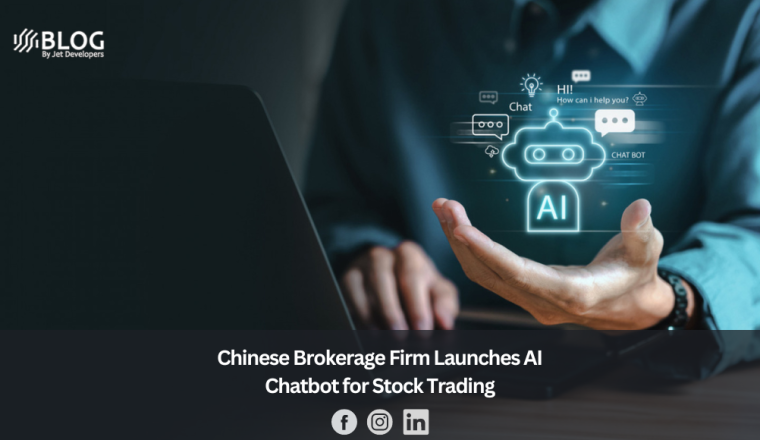
Chinese Brokerage Firm Launches AI Chatbot for Stock Trading

Tiger Brokers, a stock brokerage firm based in Beijing, China, has launched an artificial intelligence (AI) powered chatbot “to address some of the pain points” of the site’s customers, South China Morning Post reported. The firm began working on the project in January this year and is the first brokerage firm to offer such a service to its customers.

The popularity of OpenAI’s ChatGPT chatbot has opened up the application of AI to a plethora of services, with financial institutions taking a strong interest in its usage. Interesting Engineering reported last month that financial software and media company Bloomberg had launched its own AI model for the financial markets while JPMorgan Chase put its AI to identify trends from the Federal Reserve’s statements over the past 25 years and predict its next moves.

Tiger Brokers has taken AI a step further to analyze real-time market trends and make suggestions to users about trading decisions.

The power of AI to beat the markets

Anybody who has delved into the trading space knows very well the amount of data that one needs to go through and make some informed decisions about their money, if they do not wish to gamble it away. The amount of information to be analyzed increases exponentially depending on the number of stocks in one’s portfolio and factors that can impact those businesses.

With such large amounts of information to be processed, it makes sense that one deploys AI to do the hard work and identify the market trends and make recommendations. Tiger Brokers spent a good part of three months determining if it wanted to provide its own AI to its platform’s two million customers.

In January this year, the company began training its AI model using premium content that it has access to. The chatbot is now capable of analyzing current affairs and macroeconomic trends, which is expected to help users save time on market research and get the latest information.

Called TigerGPT, the chatbot is available only for a small set of users currently. Interested users might be interested in knowing that the financial company used GPT-3, the precursor to the AI model that powers ChatGPT to train its own AI. OpenAI has since launched GPT-4.

Nevertheless, AI models are also prone to “hallucinations”, a term used to describe inaccurate and sometimes even made-up responses given by the chatbot. Investment advice based on such information could be detrimental to user interest. The company is currently working with regulators to ensure that its model is compliant with current rules for such technology.

Financial markets have previously deployed robo-advisers and algorithms for investments, so the introduction of AI should not be a dramatic change, experts told SCMP.