WordPress Ad Banner

Top 10 Productive Use Cases of ChatGPT for the Year 2023

ChatGPT is an OpenAI system developed by the company called OpenAI to improve the conventional capabilities of AI systems. The ChatGPT was specifically developed for the use of digital assistants and chatbots. Compared to other chatbots ChatGPT can be able to pick what has already been said in the conversation and it corrects itself if it makes any mistake. In this article, we have explained the top ten productive use cases of ChatGPT for the year 2023. Read to know more about ChatGPt Use Cases for 2023.

  1. It Answers Questions

Unlike any other chatbot, ChatGPT can answer questions in a classy way. And ChatGPT is capable of explaining complex issues in different ways or tonalities of speaking.

  1. It Develops APPS

Some users on Twitter asked ChatGPT for help in creating an app, and guess what! it actually worked. The AI tool even gave an example of code that can be used for a particular scenario. And in addition to that, it also gives general tips for App development; nevertheless, it must not be adopted without any personal correction or review.

  1. It Acts as An Alternative to Google Search

ChatGPT is not just a competitor of other chatbots but it has the potential to replace google search. This is because it has smart answers to the queries that users search for answers to. But the only drawback is that it cannot give the source references.

  1. It Can Compose Emails

ChatGPT can compose emails. Some Twitter users asked ChatGPT to compose readymade emails which received composed emails as a result. This probably puts an end to the blank page’s era.  

  1. It Creates Recipes

Depending on the request received, ChatGPT can also show suggestions on the recipes for cooking. Unfortunately, at this point, we cannot judge to what extent these are successful. But it would be interesting to try the resulting recipes for yourself.   

  1. Writing Funny Dialogue

ChatGPT also convinces users with its artistic skills. Some users had fun with the funny dialogues that the AI chatbot generated. It also writes skits and the results are impressive and great fun to read.

  1. Language Modeling

ChatGPT can be used to train other models, such as named entity recognition and part-of-speech tagging. This can be beneficial for businesses that require the extraction of meaning from text data.

  1. Converts Text to Speech

ChatGPT can convert text to speech, allowing it to be used in a wide range of applications such as voice assistants, automated customer service, and more.

  1. Text Classification

ChatGPT can be used to categorise text, such as spam or not spam, or positive or negative sentiment. Businesses that need to filter or organise large amounts of text data may find this useful. Apart from that, ChatGPT can also translate text from one language to another using. This can be useful for businesses that need to communicate in multiple languages with customers or partners.

  1. Sentiment Analysis

ChatGPT can analyze text sentiment to determine whether it is positive, negative, or neutral. Businesses that need to monitor customer sentiment or social media mentions may find this useful. Apart from that the ChatGPT also be used to summarize lengthy texts, making them easier to understand and digest. This applies to news articles, legal documents, and other types of content.

Privacy Alert: ChatGPT Exposes Private Conversations

OpenAI CEO expresses regret, claims error has been fixed.

Artificial Intelligence (AI) is transforming our lives and work, but recent developments have raised concerns about the privacy and security of user data when using AI-powered tools.

One of these concerns is the ChatGPT glitch that allowed some users to see the titles of other users’ conversations.

ChatGPT glitch

ChatGPT is an AI chatbot developed by OpenAI that allows users to draft messages, write songs, and code. Each conversation is stored in the user’s chat history bar.

However, users began seeing conversations they didn’t have with the chatbot in their chat history as early as Monday. Users shared these on social media sites, including Reddit and Twitter.

Company Response

OpenAI CEO Sam Altman expressed regret and confirmed that the “significant” error had been fixed. The company also briefly disabled the chatbot to address the issue. OpenAI claims that users couldn’t access the actual chats. Despite this, many users are still worried about their privacy on the platform.

Privacy Concerns

The glitch suggests that OpenAI has access to user chats, which raises questions about how the company uses this information.

The company’s privacy policy states that user data, such as prompts and responses, may be used to continue training the model.

However, that data is only used after personally identifiable information has been removed. Users fear that their private information could be released through the tool.

AI Tools and Privacy

The ChatGPT glitch comes as Google and Microsoft compete for control of the burgeoning market for AI tools. Concerns have been raised that missteps like these could be harmful or have unintended consequences.

There needs to be a greater focus on privacy and security concerns as AI becomes more prevalent in our lives. Companies must be transparent about how they collect, store, and use user data and must work quickly to address any issues.

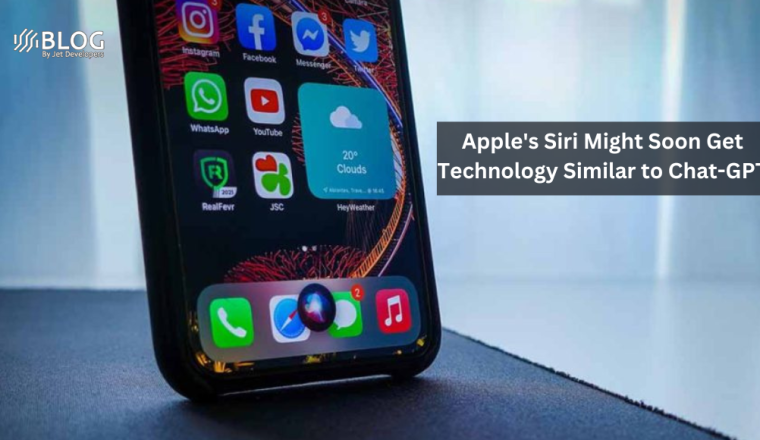
Apple’s Siri Might Soon Get Technology Similar to Chat-GPT

Apple’s Siri was introduced in 2011 with iPhone 4S. Since the launch of Siri, Apple has incorporated new features and surprised its customer base. Recently the news is that it will get a complete makeover, as the company is working on its natural language, which might give Siri ChatGPT-like abilities. 

Apple’s Siri Will Have ChatGPT-like Features

The rise in OpenAI’s ChatGPT is miles ahead of the competition, which has forced Google and Apple to reinvent their AI. This has encouraged Apple to try new ChatGPT-like features. The underutilized assistant, Siri, will get natural language generation capabilities, which will be a major turn-up for the company. The company has already incorporated a new feature in Apple TV – the streaming box. The new feature allows Siri to crack jokes and potentially set timers using AI features. 

However, the tvOS 16.4 beta upgrade is only available for developers. The general public will soon be able to avail of the feature and test it by signing up for Apple’s beta software program. However, in the coming days, Siri can be accessed with natural languages on several devices such as iPhones, iPads, and Macs. 

Google has also launched its “BARD” to compete against OpenAI’s ChatGPT – which has opened up to trusted testers before the company reveals it widely to the public. 

Recently, OpenAI has said that the launch of ChatGPT and GPT-4 is the start of an era of huge technological empowerment. It also set the stage for human-like technology to compete with Microsoft Corp. and Alphabet Inc’s Google. 

Unlike ChatGPT or GPT-4, Apple’s Siri will offer a more humane touch because of its speech feature. It is also said the capability will be limited only to Siri. However, there is no update on the feature launch as the concern grows over AI’s potential harm. Hopefully, we will hear the news soon and see the hype. 

Google Begins ChatGPT Rival “Bard” Testing to Limited Users

Google Begins ChatGPT Rival Bard Testing to Limited Users

Users can join a waitlist to gain access to Bard, which promises to help users outline and write essay drafts, plan a friend’s baby shower, and get lunch ideas based on what’s in the fridge.

A company representative told CNN it will be a separate, complementary experience to Google Search, and users can also visit Search to check its responses or sources. Google said in a blog post it plans to “thoughtfully” add large language models to search “in a deeper way” at a later time.

Google said it will start rolling out the tool in the United States and United Kingdom, and plans to expand it to more countries and languages in the future.

The news comes as Google, Microsoft, Facebook and other tech companies race to develop and deploy AI-powered tools in the wake of the recent, viral success of ChatGPT. Last week, Google announced it is also bringing AI to its productivity tools, including Gmail, Sheets and Docs. Shortly after, Microsoft announced a similar AI upgrade to its productivity tools.

Google unveiled Bard last month in a demo that was later called out for providing an inaccurate response to a question about a telescope. Shares of Google’s parent company Alphabet fell 7.7% that day, wiping $100 billion off its market value.

Like ChatGPT, which was released publicly in late November by AI research company OpenAI, Bard is built on a large language model. These models are trained on vast troves of data online in order to generate compelling responses to user prompts. The immense attention on ChatGPT reportedly prompted Google’s management to declare a “code red” situation for its search business.

But Bard’s blunder highlighted the challenge Google and other companies face with integrating the technology into their core products. Large language models can present a handful of issues, such as perpetuating biases, being factually incorrect and responding in an aggressive manner.

Google acknowledged in the blog post Tuesday that AI tools are “not without their faults.” The company said it continues to use human feedback to improve its systems and add new “guardrails, like capping the number of exchanges in a dialogue, to try to keep interactions helpful and on topic.”

Last week, OpenAI released GPT-4, the next-generation version of the technology that powers ChatGPT and Microsoft’s new Bing browser, with similar safeguards. In the first day after it was unveiled, GPT-4 stunned many users in early tests and a company demo with its ability to draft lawsuits, pass standardized exams and build a working website from a hand-drawn sketch.

ChatGPT Will Eliminate a Lot of Current Jobs: OpenAl CEO Sam Altman

Sam Altman, CEO of OpenAI and creator of ChatGPT, recently admitted that the artificial intelligence (AI) chatbot could “eliminate” many jobs. In an interview with ABC News, he added that “people should be happy” that the company was “a little bit scared” of the potential of AI.

“We’ve got to be careful here. I think people should be happy that we are a little bit scared of this,” Altman said during the interview, adding that this was because the technology itself was incredibly potent and potentially hazardous. He also explained that if he wasn’t scared, “you should either not trust me or be very unhappy that I’m in this job.”

“It is going to eliminate a lot of current jobs, that’s true. We can make much better ones. The reason to develop AI at all, in terms of impact on our lives and improving our lives and upside, this will be the greatest technology humanity has yet developed,”

Last month, the 37-year-old entrepreneur had warned in a series of tweets that the world may not be “that far from potentially scary” AI. Sam Altman expressed support for regulating it in the tweets and said rules were “critical,” and that society needed time to adjust to “something so big.”

Earlier this week, OpenAI unveiled GPT-4, its latest ChatGPT model, which Altman described as “less biased” and “more creative” than its earlier versions which is capable of processing image prompts, is more accurate than other versions, and users can have lengthier conversations with it. It’s only available to users who pay for its Plus subscription.