WordPress Ad Banner

Gaming Revolutionized: The Power of AI in Game Development

In recent years, the gaming industry has witnessed a remarkable transformation, largely driven by the emergence of artificial intelligence (AI) technology. The influence of AI in game development, however, has been present since its early days. Initially focused on creating unbeatable game-playing programs, AI has now expanded its reach to revolutionize various aspects of game design and development.

Game developers today harness the power of AI to enhance multiple facets of their creations. One prominent area where AI excels is in improving photorealistic effects, leading to visually stunning and immersive game environments. By analyzing vast amounts of data and employing sophisticated algorithms, AI enables developers to create virtual worlds that rival reality itself.

Another groundbreaking application of AI in game development lies in the generation of game content. AI algorithms can autonomously produce diverse and engaging game levels, characters, and narratives. This capability not only saves time and resources for developers but also ensures that players are constantly presented with fresh and exciting experiences.

AI also plays a crucial role in balancing in-game complexities. By monitoring player behavior and analyzing gameplay patterns, AI algorithms can dynamically adjust difficulty levels, ensuring an optimal and challenging experience for players of all skill levels. This adaptability keeps gamers engaged and prevents them from becoming bored or frustrated.

Moreover, AI provides the much-needed “intelligence” to Non-Playing Characters (NPCs). These AI-controlled entities can now exhibit advanced decision-making capabilities, adapting their behavior to the player’s actions and creating more realistic and immersive gameplay interactions. Whether it’s realistic enemy AI in a first-person shooter or intelligent companions in a role-playing game, AI-driven NPCs contribute to a more dynamic and engaging gaming experience.

Looking ahead, the future of gaming intelligence holds even more exciting possibilities. AI can be employed to analyze player behavior and preferences on a deeper level, allowing game developers to personalize gameplay experiences and deliver targeted content. This level of customization ensures that each player feels uniquely immersed in the game world, fostering a strong sense of connection and enjoyment.

AI-Powered Game Engines

Game engines are software frameworks that game developers use to create and develop video games. They provide tools, libraries, and frameworks that allow developers to build games faster and more efficiently across multiple platforms, such as PC, consoles, and mobile devices.

AI is revolutionizing game engines by allowing for the creation of more immersive and dynamic environments. Rather than manually coding a game engine’s various components, such as the physics engine and graphics rendering engine, developers can use neural networks to train the engine to create these components automatically. This can save time and resources while creating more realistic and complex game worlds.

Additionally, AI-powered game engines use machine learning algorithms to simulate complex behaviors and interactions and generate game content, such as levels, missions, and characters, using Procedural Content Generation (PCG) algorithms.

Other use cases of AI in game engines include optimizing game performance and balancing game difficulty making the game more engaging and challenging for players. 

One example of an AI-powered game engine is GameGAN, which uses a combination of neural networks, including LSTM, Neural Turing Machine, and GANs, to generate game environments. GameGAN can learn the difference between static and dynamic elements of a game, such as walls and moving characters, and create game environments that are both visually and physically realistic. 

AI-driven Game Design

Game design involves creating the rules, mechanics, and systems defining the gameplay experience. AI can play a crucial role in game design by providing designers with tools to create personalized and dynamic experiences for players.

One way AI can be used in game design is through procedural generation. Procedural generation uses algorithms to automatically create content, such as levels, maps, and items. This allows for a virtually infinite amount of content to be made, providing players with a unique experience each time they play the game. AI-powered procedural generation can also consider player preferences and behavior, adjusting the generated content to provide a more personalized experience.

Another way AI can be used in game design is through player modeling. By collecting data on how players interact with the game, designers can create player models that predict player behavior and preferences. This can inform the design of game mechanics, levels, and challenges to better fit the player’s needs.

AI can also be used to create more intelligent and responsive Non-Player Characters (NPCs) in games.

Using natural language processing (NLP) and machine learning techniques, NPCs can interact with players in more realistic and engaging ways, adapting to their behavior and providing a more immersive experience.

Furthermore, AI can analyze player behavior and provide game designers with feedback, helping them identify areas of the game that may need improvement or adjustment. This can also inform the design of future games, as designers can use the insights gained from player behavior to inform the design of new mechanics and systems.

AI and Game Characters

Artificial Intelligence is critical in developing game characters – the interactive entities players engage with during gameplay.

In the past, game characters were often pre-programmed to perform specific actions in response to player inputs. However, with the advent of AI, game characters can now exhibit more complex behaviors and respond to player inputs in more dynamic ways.

One of the most significant advances in AI-driven game character development is using machine learning algorithms to train characters to learn from player behavior.

Machine learning algorithms allow game developers to create characters that adapt to player actions and learn from their mistakes. This leads to more immersive gameplay experiences and can help make a greater sense of connection between players and game characters.

Another way that AI is transforming game characters is through the use of natural language processing (NLP) and speech recognition. These technologies allow game characters to understand and respond to player voice commands. For example, in Mass Effect 3, players can use voice commands to direct their team members during combat.

AI is also used to create more realistic and engaging game character animations. By analyzing motion capture data, AI algorithms can produce more fluid and natural character movements, enhancing the overall visual experience for players.

AI and Game Environments

AI can also generate specific game environments, such as landscapes, terrain, buildings, and other structures. By training deep neural networks on large datasets of real-world images, game developers can create highly realistic and diverse game environments that are visually appealing and engaging for players.

One method for generating game environments is using generative adversarial networks (GANs). GANs consist of two neural networks – a generator and a discriminator – that work together to create new images that resemble real-world images.

The generator network creates new images, while the discriminator network evaluates the realism of these images and provides feedback to the generator to improve its output.

Another method for generating game environments is through the use of procedural generation. Procedural generation involves creating game environments through mathematical algorithms and computer programs. This approach can create highly complex and diverse game environments that are unique each time the game is played.

AI can also adjust game environments based on player actions and preferences dynamically. For example, in a racing game, the AI could adjust the difficulty of the race track based on the player’s performance, or in a strategy game, the AI could change the difficulty of the game based on the player’s skill level.

AI and Game Narrative

AI can also be used to enhance the narrative in video games. Traditionally, human writers have developed game narratives, but AI can assist with generating narrative content or improving the overall storytelling experience.

Natural language processing (NLP) techniques can be used to analyze the player feedback and adjust the narrative in response. For example, AI could analyze player dialogue choices in a game with branching dialogue options and change the story accordingly.

Another use of AI in game narratives is to generate new content. This can include generating unique character backstories, creating new dialogue options, or even generating new storylines. 

AI and Game Testing

Game testing, another critical aspect of game development, can be enhanced by AI. Traditional game testing involves hiring testers to play the game and identify bugs, glitches, and other issues. However, this process can be time-consuming and expensive, and human testers may not always catch all the problems.

The other alternative is the use of scripted bots. Scripted bots are fast and scalable, but they lack the complexity and adaptability of human testers, making them unsuitable for testing large and intricate games.

AI-powered testing can address these limitations by automating many aspects of game testing, reducing the need for human testers, and speeding up the process. 

Reinforcement Learning (RL) is a branch of machine learning that enables an AI agent to learn from experience and make decisions that maximize rewards in a given environment.

In a game-testing context, the AI can take random actions and receive rewards or punishments based on the outcomes, such as earning points. Over time, it can develop an action policy that yields the best results and effectively test the game’s mechanics.

Machine learning algorithms can also identify bugs and glitches in the game. The algorithm can analyze the game’s code and data to identify patterns that indicate a problem, such as unexpected crashes or abnormal behavior. This can help developers catch issues earlier in the development process and reduce the time and cost of fixing them.

The Future of AI in Game Development

The gaming industry has always been at the forefront of technological advancements, and artificial Intelligence (AI) is no exception.

In recent years, AI has played an increasingly important role in game development, from improving game mechanics to enhancing game narratives and creating more immersive gaming experiences.

As AI technology continues to evolve, the possibilities for its application in game development are expanding rapidly.

Here are some potential areas that AI is expected to shape the future of the gaming industry:

Automated Game Design:

One of the most exciting prospects of AI in game development is automated game design.

By training AI models on large datasets of existing games, it could be possible to create new games automatically without human intervention. AI algorithms could generate game mechanics, levels, characters, and more, potentially significantly reducing development time and costs.

However, this technology is still in its infancy, and whether AI-generated games can replicate the creativity and originality of human-designed games remains to be seen.

Data Annotation:

Data annotation is the process of labeling data to train AI models. In the gaming industry, data annotation can improve the accuracy of AI algorithms for tasks such as object recognition, natural language processing, and player behavior analysis. This technology can help game developers better understand their players and improve gaming experiences.

Audio or Video Recognition based Games:

Another exciting prospect for AI in game development is audio or video-recognition-based games. These games use AI algorithms to analyze audio or video input from players, allowing them to interact with the game using their voice, body movements, or facial expressions.

This technology can potentially create entirely new game experiences, such as games that respond to players’ emotions or games that are accessible to players with disabilities.

Conclusion

AI has already significantly impacted the gaming industry and is poised to revolutionize game development in the coming years.

With the help of AI, game developers can create more engaging and immersive games while reducing development time and costs. AI-powered game engines, game design, characters, environments, and narratives are already enhancing the gaming experience for players.

Decision trees, reinforcement learning, and GANs are transforming how games are developed. The future of AI in gaming is promising with the advent of automated game design, data annotation, and hand and audio or video recognition-based games.

As AI technology advances, we can expect game development to become even more intelligent, intuitive, and personalized to each player’s preferences and abilities.

Google Advanced Analytics Professional Certificate

The Google Advanced Analytics Professional Certificate is an online certification program offered by Google. It is designed to help individuals develop the skills and knowledge necessary to become proficient in advanced analytics techniques and tools.

The certificate program covers various topics related to advanced analytics, including data collection, data manipulation, data visualization, and data analysis. Participants will learn how to leverage Google Analytics and other analytics tools to extract insights, track user behavior, measure website performance, and make data-driven decisions.

The program consists of a series of online courses, assessments, and hands-on projects that allow participants to apply their knowledge in real-world scenarios. By completing the program and earning the certificate, individuals can demonstrate their expertise in advanced analytics and enhance their career prospects in fields such as digital marketing, data analysis, and business intelligence.

The Google Advanced Analytics Professional Certificate is recognized by industry professionals and can serve as a valuable credential to showcase proficiency in advanced analytics techniques using Google Analytics and related tools.

There are several compelling reasons to pursue the Google Advanced Analytics Professional Certificate:

  1. Enhance Your Analytical Skills: The course provides comprehensive training in advanced analytics techniques, allowing you to sharpen your analytical skills and gain expertise in leveraging data to make informed decisions.
  2. Industry-Recognized Credential: By earning the certificate, you acquire a valuable credential that is recognized by industry professionals. It can help you stand out in job applications and demonstrate your proficiency in advanced analytics.
  3. Stay Competitive in the Job Market: In today’s data-driven world, companies are increasingly relying on data analysis to drive business strategies. By obtaining the Google Advanced Analytics Professional Certificate, you position yourself as a competitive candidate for roles in digital marketing, data analysis, business intelligence, and related fields.
  4. Expand Career Opportunities: The demand for professionals skilled in advanced analytics is growing rapidly across industries. This course equips you with the necessary knowledge and tools to pursue exciting career opportunities in data analysis, marketing analytics, web analytics, and more.
  5. Deep Dive into Google Analytics: The course focuses on Google Analytics, one of the most widely used analytics tools in the industry. You’ll gain an in-depth understanding of its features, capabilities, and advanced functionalities, enabling you to leverage its full potential for data analysis and decision-making.
  6. Hands-on Learning Experience: The program includes hands-on projects that allow you to apply your knowledge to real-world scenarios. This practical experience enhances your learning and prepares you to tackle analytics challenges in professional settings.
  7. Continuous Professional Development: As technology and analytics methodologies evolve, staying updated is crucial. The Google Advanced Analytics Professional Certificate provides ongoing access to course materials and updates, allowing you to continue learning and adapting to the latest advancements in the field.

Overall, undertaking the Google Advanced Analytics Professional Certificate can provide you with the skills, knowledge, and credentials needed to excel in the analytics industry, open up new career opportunities, and stay at the forefront of data-driven decision-making.

Step for Apply in Google Advanced Analytics Professional Certificate

  1. Visit the Google Career Certificates website: Go to the official Google Career Certificates website that offers the Advanced Analytics Professional Certificate program.
  2. Explore the program details: Review the program information, curriculum, and requirements to ensure it aligns with your interests and goals. Take note of any prerequisites or recommended skills.
  3. Create a Google account: If you don’t already have one, create a Google account. This will be required to access the course materials and complete the certification program.
  4. Enroll in the program: Click on the “Enroll” or “Get Started” button on the program page to initiate the enrollment process. You may be prompted to provide your Google account information or sign in to your account.
  5. Complete the registration form: Fill out the necessary registration form, which may include personal information such as your name, email address, and country of residence. Follow the instructions provided during the registration process.
  6. Access the course materials: Once you’ve successfully enrolled, you will gain access to the course materials, including video lectures, readings, assignments, and quizzes. The program may be self-paced, allowing you to study at your convenience.
  7. Complete the coursework: Engage with the course content, complete the required assignments, and actively participate in any interactive elements provided. This will help you grasp the concepts and develop your skills in advanced analytics.
  8. Finish the assessments and projects: Throughout the program, there may be assessments, quizzes, and hands-on projects that you need to complete. These assessments help gauge your understanding and provide opportunities to apply your knowledge in real-world scenarios.
  9. Earn the certificate: Once you have successfully completed all the required coursework, assessments, and projects, you will be eligible to receive the Google Advanced Analytics Professional Certificate. Follow the instructions provided to claim and download your certificate.

It’s important to note that specific application processes and requirements may vary, so it’s recommended to visit the official Google Career Certificates website for the most up-to-date and accurate information on how to apply for the Google Advanced Analytics Professional Certificate.

Mastering Database Management: A Comprehensive Guide

In today’s data-driven world, effective database management is paramount for organizations of all sizes. Databases serve as the backbone of modern businesses, storing and managing vast amounts of information critical for decision-making, customer interactions, and operational efficiency. This article explores the fundamentals of database management, its importance, best practices, and the evolving landscape of database technologies.

What is Database Management?

Database management involves the organization, storage, retrieval, and protection of data in a structured manner. Databases store various types of data, from customer information to financial records, in an efficient and secure way. Database management encompasses tasks such as data modeling, data storage, data manipulation, and data security.

Importance of Database Management

  1. Data Integrity: Database management systems (DBMS) ensure data accuracy and consistency, preventing errors and discrepancies in information. This is crucial for maintaining trust with customers and stakeholders.
  2. Data Accessibility: A well-managed database provides quick and easy access to information, improving productivity and decision-making across the organization.
  3. Scalability: As businesses grow, their data needs increase. A robust database management system allows for seamless scalability to accommodate expanding data volumes.
  4. Security: Data breaches and cyberattacks are a constant threat. Database management includes security measures to safeguard sensitive information, complying with data protection regulations.
  5. Business Continuity: Effective backup and recovery mechanisms within database management help organizations recover from data loss or system failures, ensuring uninterrupted operations.

Best Practices in Database Management

  1. Data Modeling: Start by designing a logical data model that represents your organization’s data structure. This model should align with business requirements and promote data efficiency.
  2. Data Normalization: Normalize your database to eliminate data redundancy and maintain data integrity. This process involves organizing data into separate tables to reduce duplication.
  3. Backup and Recovery: Regularly backup your database and establish robust recovery procedures to prevent data loss in case of disasters or technical failures.
  4. Security Measures: Implement security protocols such as user authentication, authorization, encryption, and auditing to protect sensitive data from unauthorized access.
  5. Performance Optimization: Regularly monitor database performance and fine-tune queries to ensure optimal system efficiency. Indexing and query optimization can significantly improve speed.
  6. Regular Maintenance: Routine maintenance tasks, such as data cleanup and index rebuilding, help keep your database running smoothly.

Evolving Landscape of Database Technologies

The world of database management is continuously evolving, with new technologies and approaches emerging to meet the changing demands of businesses. Here are a few notable trends:

  1. NoSQL Databases: NoSQL databases like MongoDB and Cassandra are gaining popularity for their ability to handle unstructured and semi-structured data, making them suitable for modern, data-intensive applications.
  2. Cloud-Based Databases: Cloud databases, offered by providers like Amazon Web Services (AWS) and Microsoft Azure, provide scalability, flexibility, and cost-efficiency. They allow organizations to focus on data management rather than infrastructure.
  3. Big Data and Analytics: With the growth of big data, databases like Hadoop and Spark have become essential for processing and analyzing vast datasets, enabling businesses to derive valuable insights.
  4. Blockchain Databases: Blockchain technology is revolutionizing data security and trust by providing an immutable ledger for transactions and records.

Conclusion

Effective database management is the cornerstone of modern business operations. It ensures data integrity, accessibility, and security, while also facilitating business continuity and growth. By adhering to best practices and staying updated with evolving database technologies, organizations can harness the power of data to make informed decisions and stay competitive in today’s data-driven world.

ThoughtSpot Unveils New Product Capabilities for Streamlined Analytics

ThoughtSpot, a leading business intelligence (BI) specialist, recently hosted its customer conference titled “Beyond 2023,” where it unveiled a range of new product capabilities aimed at simplifying analytics for enterprise users.

The conference highlighted the growing significance of consuming insights through artificial intelligence (AI). ThoughtSpot emphasized the integration of AI-powered analytics into their offerings, enabling organizations to leverage advanced data analysis techniques for enhanced decision-making.

ThoughtSpot also showcased notable accessibility features designed to make analytics more user-friendly. Among these features is a mobile-friendly interface that allows users to access and explore analytics on the go. Additionally, ThoughtSpot announced integrations that enable teams to extract valuable insights directly from the platforms they use, further enhancing collaboration and productivity.

Sumeet Arora, the Chief Development Officer at ThoughtSpot, expressed excitement about the new enhancements introduced during the conference. Arora emphasized that each of these enhancements embraces the future of AI-powered analytics, providing organizations of all sizes with personalized ways to experience, collaborate, model, and access data. These advancements are expected to boost productivity and facilitate more efficient decision-making processes across industries.

ThoughtSpot’s commitment to leveraging AI and its dedication to improving accessibility in analytics underscore the company’s mission to empower organizations with powerful insights and data-driven decision-making capabilities. With the introduction of these new product capabilities, ThoughtSpot is positioning itself at the forefront of the evolving BI landscape, providing enterprise users with simplified and impactful analytics tools.

Here’s a rundown of the key developments:

Querying data with natural language prompts

ThoughtSpot led the discussion about simplifying analytics by talking about Sage, its new LLM-driven search experience. First announced in March, Sage provides enterprise users with a chat experience where they can type natural language prompts to query data for text or visual insights. It combines foundational models, including GPT-3, with ThoughtSpot’s patented search technology to convert the prompts into SQL and produce answers with accuracy and reliability. 

The company said Sage can provide results in seconds, and includes related suggestions for drilling into the served insights. Users also get the ability to provide feedback by correcting keyword tokens, further training the system to learn and correct future queries. The technology is in private preview, with ThoughtSpot planning to open access in a phased manner. It said the solution will be available initially to all current and new users of its platform’s Trial and Team editions.

Staying in the loop via Monitor for Mobile

Next, ThoughtSpot debuted a mobile-first analytics feature called ThoughtSpot Monitor for Mobile. This dedicated feature inside the ThoughtSpot app allows users to subscribe to key performance indicators and automatically get notified on their mobile devices as these metrics change, also receiving an explanation of the drivers behind that change. This ensures teams can make decisions whenever and wherever required.

To provide explanations, ThoughtSpot uses AI. First, it analyzes attributes behind each KPI and uses machine learning to identify what is driving the changes. Then, with the help of generative AI, it delivers an explanation, helping users understand what changed and why — and what they need to do in response. Currently the feature is preview, but ThoughtSpot says it will be available in the coming months.

New integrations, including an AI assistant in Slack

The business intelligence leader also announced a series of integrations to help teams take advantage of insights right where they work. These include a connector allowing users to share links from ThoughtSpot Liveboards and generate visualization previews in Slack; an interactive AI assistant called Spot to query data in natural language via Slack; and ThoughtSpot Analytics for Excel, Google Sheets and Slides. 

ThoughtSpot Analytics for Sheets is available starting today, while the rest of the capabilities are in preview and slated to roll out at a later date.

New tools for collaboration on ThoughtSpot liveboards

ThoughtSpot is also making its Liveboards (ThoughtSpot’s version of a dashboard) more collaborative, with new features such as note tiles, cross filters and parameters. The note tiles can be used to add details like branding, explanations or context. Filters can help ensure consistency in analysis, while parameters can be used to conduct a “what-if” scenario analysis.

The company is also rolling out an in-app commenting system to promote feedback, collaboration and brainstorming, as well as verified Liveboards to increase transparency and trust for end users.

Visual data modeling for analytics

Finally, the company updated its data workspace with a new data modeling studio, an offering that provides a visual drag-and-drop interface and guided UI to simplify modeling data for analytics. 

With this solution, ThoughtSpot says, users can inherit existing joins from their database or create new joins through a guided UI; build guardrails for search by dragging and dropping relevant columns in their model; and scale data literacy across the business by adding custom formulas, adjusting attributes and configuring column properties.

ThoughtSpot Beyond 2023 runs May 9-10, virtually.

Collaboration of European Space Enterprises to Develop Alternative to Starlink

In response to Elon Musk’s Starlink, European space and telecommunications companies have come together to bid on the Infrastructure for Resilience, Interconnectivity, and Security by Satellite (IRIS2) project. The goal of IRIS2 is to provide Europe with a reliable, secure, and interconnected satellite infrastructure that will cater to the region’s governments, businesses, and citizens. With Musk’s Starlink already providing internet connectivity to remote areas, the European Union aims to create an independent infrastructure that does not rely on a single private service provider, especially during times of conflict or political tensions.

IRIS2 promises to deliver a new connectivity infrastructure that prioritizes security and resilience, making it an attractive alternative to Musk’s service. The move also highlights Europe’s growing interest in space technology and its desire to have a stake in the industry. The joint effort of European companies demonstrates a shared commitment to create a more diverse and stable satellite infrastructure for the continent, positioning it as a significant player in the space industry.

Who will build IRIS2?

The European Commission’s call for tender of the satellite constellation was answered by an open consortium consisting of the biggest names in the space and telecommunications arena in Europe.

This included Airbus Defence and Space, Eutelsat, Hispasat, SES, Thales Alenia Space on the space front, Deutsche Telekom, OHB, Orange, Hisdesat, Telespazio, and Thales from the telecommunications sector. Together, the consortium wants to build the satellite constellation on a “multi-orbit architecture” which will be “interoperable with the terrestrial ecosystem,” the press release said.

European space companies come together to build a Starlink alternative
Satellite internet and communication technology over Europe

With the bigwigs lining up for the contract that is expected to cost $6 billion, there seems to be little space for new entrants in the space sector, something the EU has been pushing to create a stronger commercial space sector in Europe.

European Space Agency (ESA) has plenty of experience building satellite constellations such as Galileo and Copernicus, which are already in orbit. However, the project for providing internet connectivity requires a high degree of nimbleness, given Starlink’s established popularity and plans for expansion.

IRIS2 needs to be implemented rapidly, and the EU has set 2027 as the target date for global coverage. But with such a large consortium planning to take up the project, the pace of execution is under question. Even the likes of Starlink took over four years to establish global coverage with a strong workhorse called Falcon 9 on its side.

The Ariane 6 launch vehicle isn’t expected to be ready until next year and may not even have the spare launch capacity that IRIS2 will need for global coverage by 2027, Ars Technica reported.

Can a major consortium repeat the achievements of Starlink in a similar timeframe remains to be seen.

AI Pioneer Geoffrey Hinton Quits Google, Warns Against Rapid AI Development

One of the pioneers in the development of deep learning models that have become the basis for tools like ChatGPT and Bard, has quit Google to warn against the dangers of scaling AI technology too fast.

In an interview with the New York Times on Monday, Geoffrey Hinton – a 2018 recipient of the Turing Award – said he had quit his job at Google to speak freely about the risks of AI.

He told NYT journalist Cade Metz that part of him now regrets his life’s work, explaining how tech giants like Google and Microsoft had become locked in competition on AI that it may be impossible to stop.

“Look at how it was five years ago and how it is now,” he said. “Take the difference and propagate it forwards. That’s scary.”

As companies improve their AI systems, he said, they become increasingly dangerous: “It is hard to see how you can prevent the bad actors from using it for bad things”.

While chatbots today tend to complement human workers, it would not be long before they replaced a number of human roles. “It takes away the drudge work,” he said. “It might take away more than that.”

Perhaps more concerning, the article talked about how AI systems can learn unexpected behavior from the vast amounts of data they analyze, and what that might mean when AI not only generates computer code, but also deploys it.

“The idea that this stuff could actually get smarter than people — a few people believed that,” he said. “But most people thought it was way off. And I thought it was way off. I thought it was 30 to 50 years or even longer away. Obviously, I no longer think that.”

After publication of the interview, Hinton was keen to clarify that he had not intended to criticize his old employer, Tweeting: “In the NYT today, Cade Metz implies that I left Google so that I could criticize Google. Actually, I left so that I could talk about the dangers of AI without considering how this impacts Google. Google has acted very responsibly.”

Back in 1986, Hinton, David Rumelhart and Ronald J Williams, wrote a highly-cited paper that popularised the backpropagation algorithm for training multi-layer neural networks, which mimics how biological brains learn.

For the last 10 years, the 75-year-old British/Canadian has divided his time between his work for the University of Toronto and his AI startup, DNNresearch, which was acquired by Google in 2013.

How To Use ChatGPT To Improve Your Microsoft Excel Skills

Since ChatGPT’s debut in November, users have been turning to the popular chatbot created by OpenAI for help with everything from emailing coworkers and updating resumes to finding recipes ideas and overhauling dating profiles. 

While some fear the chatbot is already eliminating jobs, it has also introduced ways to help make work more efficient, allowing users to shift their energy toward other tasks and projects. 

One example is by using the generative AI for help with data processing programs workers often struggles with, like Microsoft Excel and Google Sheets. We asked ChatGPT how it can help alleviate spreadsheet woes — here’s what the chatbot had to say about how it can help make your Excel experience easier.

Assisting with tricky formulas, scripts, and templates

ChatGPT can help suggest the best formulas to use within data sets to identify insights you’re seeking and more quickly find results. The technology can also help write Excel scripts or macros, an action or set of actions that can be run repeatedly, like changing the font size or color of a group of cells, which can help make your work more efficient.

According to ChatGPT, it can assist in designing or finding a spreadsheet that fits a specific template with headings and categories already implemented. If a user needs a function that isn’t already available in Excel or Sheets, ChatGPT says it can help walk you through the process of writing it in a program like the Google Apps Script.

Identifying data trends and flagging errors 

According to ChatGPT, the technology can help analyze data by finding trends, summarizing information into a few key statistics, and even helping to create charts and different ways to visualize data. The technology can also help quickly identify errors or missing data points, offering remedial suggestions along the way.

ChatGPT said it can help users integrate data into other programs, or help with importing and exporting data to an Application Programming Interface, commonly referred to as an API.

Helping beginners learn common tricks

The chatbot can walk beginners through common Excel tricks to make the program more efficient, like keyboard shortcuts or step-by-step directions on how to format data in a certain way.

ChatGPT said it can also help with general troubleshooting as issues arise with a spreadsheet, which could be faster than looking through the help menu of a specific program.

Finally, the chatbot said it can recommend other tutorials or guides available online based on your current Excel skill level or what specific task you are looking to complete.

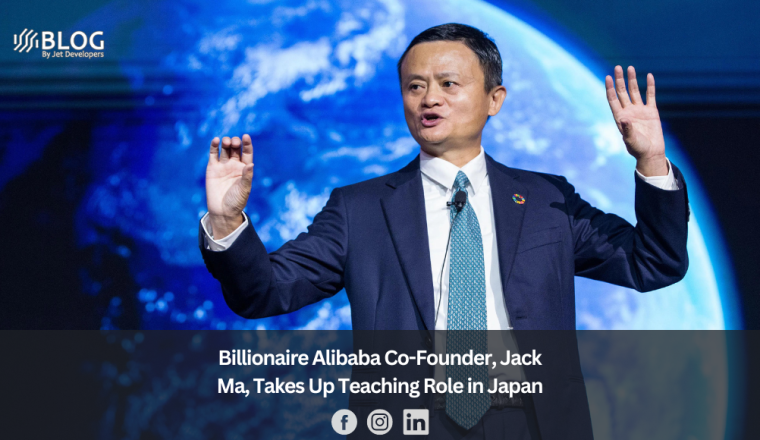
Billionaire Alibaba Co-Founder, Jack Ma, Takes Up Teaching Role in Japan

Jack Ma, the co-founder of Chinese e-commerce giant Alibaba, has taken up a teaching position at Tokyo College in Japan. This marks one of the first public roles he has taken since he disappeared from the spotlight in 2020. According to an announcement by Tokyo College on May 1, Ma will research sustainable agriculture and food production as part of his new role.

In addition to his research, Ma will share his vast knowledge on entrepreneurship, innovation, and corporate management in seminars at the college. This is a return to teaching for Ma, who was an English teacher for several years before co-founding Alibaba. He retired from the company in September 2019 and said in May 2019 that he would go back to teaching after his retirement.

Ma’s return to a public role follows his disappearance from the spotlight in 2020 after he criticized China’s financial regulatory system. His comments led to a crackdown on tech firms in China, including Alibaba, which saw its share price plummet. Ma’s wealth also took a hit, falling from $61 billion to an estimated $33 billion, according to the Bloomberg Billionaires Index.

Since his disappearance, there has been intense speculation about Ma’s whereabouts. He was spotted in Japan in November 2022, where he socialized mainly within several private members clubs, and in January 2023, he was spotted in Bangkok, Thailand, where he visited a Michelin-starred street food restaurant and watched a Muay Thai fight. In March, he returned to a school he founded in his hometown of Hangzhou, China.

Ma’s new role as a visiting professor at Tokyo College marks his return to a public-facing role. It is also a sign that he is once again comfortable being in the public eye. While it is unclear what his long-term plans are, his return to teaching suggests that he is interested in sharing his knowledge and experience with others. His new role is also a reminder of his commitment to education and his roots as a teacher before he became a billionaire.

Linux Foundation Launches New Organization to Maintain TLA+

TLA+ (Temporal Logic of Actions), a programming language for modeling programs and systems, particularly concurrent and distributed ones, is moving from Microsoft’s jurisdiction to the Linux Foundation and getting its own, separate foundation to promote it.

The TLA+ Foundation, an independent non-profit organization dedicated to fostering the adoption and development of the language, was launched by the Linux Foundation on April 21. The TLA+ Foundation will provide education and training, fund research, develop tools, and build a community of practitioners. Inaugural members of the TLA+ Foundation include Oracle, Microsoft, and Amazon Web Services (AWS).

The TLA+ language has been used to verify complex software systems, reduce errors and improve reliability, the Linux Foundation said. The language purports to detect design flaws early in the development process to save resources and time.

Underpinning TLA+ is the notion that the best way to describe things precisely is with simple mathematics. TLA+ and its tools, according to the Linux Foundation, are useful for eliminating fundamental design errors that are hard to find and expensive to correct in code. The language was invented by computer scientist Leslie Lamport, now a distinguished scientist with Microsoft Research.

Among the users of TLA+ is Oracle, which has used the language to model more than 25 services of Oracle Cloud Infrastructure, including the block storage and file storage services, and verify the correctness of complex design scenarios including distributed replication, failover, and live re-sharding.

Apple Files Patent for Newer Version Of The iPod

Apple has recently filed a patent with the U.S. Patent Office for a device that is very reminiscent of the iPod. The device is meant do everything a smartphone does without the annoying calls and texts interfering with the user experience.

It can contain music, videos and books. It seems the main notable difference to the old iPhone is that it can host wireless earbuds. That’s definitely an improvement over the older model and a feature worth having.

However, thus far there is no news on whether the device will come to market. It is still for now just a patent and many patents never see the light of day.

Apple could indeed be trying to stop the competition from ever inventing anything that could cut into the company’s market share.

In July of 2017, Apple officially killed off the iPod Shuffle and Nano. The company stated at the time :”Today, we are simplifying our iPod lineup with two models of iPod touch now with double the capacity starting at just $199 and we are discontinuing the iPod shuffle and iPod nano.”

A top-secret iPod mission

However, in August of 2020, news surfaced of the firm working with the government to build a top-secret iPod. A former Apple software engineer, who worked for the company for 18 years, shared the story of how Apple helped a U.S. Department of Energy contractor modify a 5th-generation iPod to secretly record and store data.

The events took place in 2005 when the engineer was approached by the director of iPod software to try “help two engineers from the U.S. Department of Energy build a special iPod.” The secret iPod was to be developed right under Steve Jobs’ nose, with only four individuals being aware of the project at that time.