WordPress Ad Banner

Peter Steinberger, the Founder of OpenClaw, Is Joining OpenAI

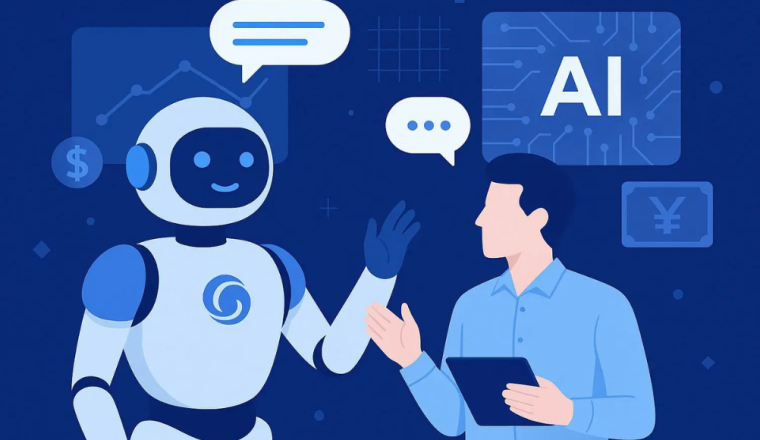
The world of artificial intelligence is evolving at lightning speed, and major moves by industry leaders often signal the next big shift. One such development is Peter Steinberger, the founder of OpenClaw, officially joining OpenAI.

This announcement has sparked excitement across the AI community, especially among those closely following agentic AI — intelligent systems designed to act autonomously and perform real-world tasks. But what’s the real reason behind this move, and why does it matter so much?

Who Is Peter Steinberger?

Peter Steinberger is a well-known innovator in the AI space and the mind behind OpenClaw, a project focused on building open-source, intelligent AI agents capable of executing complex workflows.

His work has been instrumental in:

  • Advancing multi-agent systems
  • Promoting open-source AI development
  • Making autonomous AI tools more accessible

Why Did He Join OpenAI?

1. To Scale Agentic AI at a Global Level

OpenClaw delivered impressive results, but scaling such advanced AI systems requires massive computational resources, research talent, and infrastructure — something OpenAI excels at.

By joining OpenAI, Peter gains access to:

  • World-class research teams
  • High-performance computing resources
  • Global deployment platforms

This allows his vision of powerful, real-world AI agents to reach millions, possibly billions, of users.

2. To Accelerate Innovation in Personal AI Agents

One of Peter’s long-term goals is to create AI agents that behave like intelligent digital coworkers, capable of:

  • Managing emails
  • Scheduling meetings
  • Booking travel
  • Automating business workflows
  • Running software operations

At OpenAI, this vision can move from experimental prototypes to production-grade AI systems.

3. To Combine Open Source with Enterprise-Grade AI

Instead of shutting down OpenClaw, the project will continue as an open-source foundation, now supported by OpenAI.

This strategic move creates a powerful blend of:

  • Open research and community-driven innovation
  • Enterprise-level AI engineering and deployment

What This Means for the AI Industry

A New Era of Intelligent Agents

This collaboration signals a strong push toward fully autonomous AI systems — agents that don’t just answer questions, but take action.

Smarter Workflows and Productivity

From startups to enterprises, businesses can expect:

  • Faster automation
  • Reduced manual workloads
  • Smarter decision support systems

“The future of AI is not just conversation — it’s action.”

Key Benefits of This Move

  • Faster development of agentic AI
  • Global reach and scalability
  • Continued open-source contributions
  • More intelligent, autonomous systems Stronger real-world AI applications

Future Possibilities

With Peter Steinberger at OpenAI, we can expect breakthroughs in:

  • Autonomous task execution
  • Multi-agent collaboration
  • AI-powered digital employees
  • Intelligent workflow automation

These innovations may redefine how we work, build products, and manage daily tasks.
Agentic AI: The Next Evolution of Artificial Intelligence in 2026

Agentic AI is a new generation of artificial intelligence that doesn’t just answer questions — it acts on them. Instead of just generating text or images like traditional AI, agentic systems can set goals, plan multiple steps, make decisions, and execute tasks autonomously — meaning they can do the work for you across tools and apps.

Instead of waiting for constant instructions, agentic AI can:

  • Interpret complex goals
  • Plan multi-step workflows
  • Use tools, APIs, and applications
  • Monitor outcomes and adapt strategies
  • Learn from previous actions

In simple terms, agentic AI doesn’t just answer — it takes action.

This makes it fundamentally different from traditional generative AI, which mainly focuses on producing text, images, or code based on user prompts.

Why Agentic AI Matters Right Now

The rise of agentic AI marks a turning point in the role of artificial intelligence. Instead of acting as a support tool, AI is becoming a digital worker capable of executing real-world tasks.

This shift is important because:

  • Businesses want automation that truly saves time, not just suggestions.
  • Teams need intelligent systems that can manage workflows, not just generate ideas.
  • Industries demand decision-making support, not just data analysis.

Agentic AI brings all of these capabilities together, creating a new class of intelligent systems that operate with purpose and autonomy.

What’s New in Agentic AI in 2026

The year 2026 is being seen as a breakthrough phase for agentic AI. Several major innovations are driving its rapid adoption.

1. True Autonomy and Goal-Based Execution

Modern agentic systems can accept high-level objectives and independently figure out how to accomplish them.

For example:

“Analyze our customer data, identify churn risks, generate insights, and prepare a report.”

An agentic AI system can perform each of these steps without continuous supervision — planning, executing, evaluating, and adjusting automatically.

2. Deep Integration with Real Systems

Agentic AI is no longer limited to simulations or experimental environments. It now integrates directly with:

  • Business applications
  • Cloud platforms
  • Databases
  • Workflow management systems
  • CRM and ERP tools

This allows AI agents to interact with live systems, making them capable of handling real operational tasks.

3. Long-Term Memory and Adaptive Learning

New agentic models are capable of:

  • Retaining context across long sessions
  • Learning from past outcomes
  • Improving decision-making over time

This enables them to function more like persistent digital employees, rather than short-term assistants.

4. Multi-Agent Collaboration

One of the most powerful innovations is multi-agent collaboration, where multiple specialized AI agents work together.

For example:

  • One agent researches data
  • Another analyzes insights
  • A third prepares reports
  • A fourth manages scheduling

Together, they form an AI workforce, capable of solving complex business problems faster and more efficiently.

Real-World Applications of Agentic AI

It is already transforming multiple industries.

Business Operations

  • Automated financial reporting
  • Invoice processing
  • HR onboarding workflows
  • Compliance monitoring

Software Development

  • Code generation and debugging
  • Automated testing
  • Deployment coordination
  • Infrastructure monitoring

Data & Analytics

  • Autonomous data analysis
  • Predictive modeling
  • Decision-driven automation

Customer Experience

  • Smart support agents
  • Workflow-based ticket resolution
  • Personalized service automation

These use cases highlight how agentic AI is becoming an execution engine, not just a recommendation tool.

Challenges and Responsible Use

Despite its power, agentic AI comes with serious challenges:

  • Control & Governance: Autonomous actions must be monitored.
  • Trust & Reliability: Errors can cause real-world impact.
  • Security Risks: Improper access can lead to misuse.
  • Ethical Concerns: Decision transparency and accountability are critical.

This is why most organizations are adopting human-in-the-loop systems, where humans oversee and validate critical AI actions.

The Future of Agentic AI

Looking ahead, agentic AI is expected to become:

  • A standard part of enterprise software
  • A core productivity layer for businesses
  • A foundation for autonomous digital ecosystems

In the coming years, we may see AI agents acting as managers, planners, coordinators, and executors — transforming how work itself is structured.

Agentic AI represents a powerful evolution of artificial intelligence — moving from response-based systems to action-driven intelligence. It opens the door to smarter automation, faster execution, and scalable digital operations.

The real question is not if agentic AI will shape the future — but how fast it will become part of everyday work.

AI Chatbots in Real Life: How People Use Them, Which One Is Most Popular, and What Developers Prefer

Artificial Intelligence is no longer just a futuristic concept AI Chatbots in Real Life, it is a powerful reality shaping how we learn, work, and communicate. AI chatbots have rapidly become everyday digital companions for students, developers, writers, marketers, and businesses.

From writing content and generating code to solving complex problems and providing instant customer support, AI chatbots are redefining productivity. But the real questions are:

How are people actually using AI chatbots? Which chatbot is the most popular? Which AI tools do developers prefer — and why?

In this blog post, we explore real-world usage trends, popular platforms, developer preferences, and the pros and cons of AI chatbots.

How People Are Using AI Chatbots Today

AI chatbots are no longer limited to simple question-answer interactions. Today, they serve as intelligent productivity assistants across multiple domains.

Common Use Cases

📚 Students

  • Homework and assignment assistance
  • Concept explanation
  • Study notes creation
  • Programming practice
  • Exam preparation

👨‍💻 Developers

  • Code generation
  • Debugging and error fixing
  • Logic building
  • Framework guidance
  • API integration
  • Documentation writing

✍️ Content Creators & Marketers

  • Blog writing
  • SEO content generation
  • Social media captions
  • Video scripts
  • Ad copywriting

🏢 Businesses

  • Customer support automation
  • Email drafting
  • Business reports
  • Proposal writing
  • Data analysis

Most Popular AI Chatbots in 2026

Several AI chatbots dominate the global market, but a few clearly stand out.

Top AI Chatbots

  1. ChatGPT (OpenAI)
    • Most widely used AI chatbot
    • Excellent for coding, writing, reasoning, and productivity
    • User-friendly interface
    • Highly reliable responses
  2. Google Gemini (formerly Bard)
    • Fast processing
    • Strong integration with Google services
    • Real-time web connectivity
  3. Microsoft Copilot
    • Designed for developers
    • Seamless integration with Visual Studio and GitHub
    • Enterprise-grade productivity
  4. Claude AI (Anthropic)
    • Excellent for long-form content
    • Strong reasoning abilities
    • Safe AI approach

Which AI Chatbot Do Developers Prefer?

Developers prioritize accuracy, logic clarity, and efficient problem-solving. Based on global usage trends:

Developer Favorites

  • ChatGPT
  • GitHub Copilot
  • Claude AI

Pros and Cons of AI Chatbots

Advantages

  • Saves time and effort
  • Enhances learning
  • Boosts productivity
  • 24/7 availability
  • Multi-task support
  • Cost-effective solutions

Disadvantages

  • Sometimes generates incorrect information
  • Risk of dependency
  • Reduced critical thinking
  • Data privacy concerns
  • Limited emotional intelligence

WordPress Launches New Claude Connector: Smarter AI-Powered Site Management Is Here

WordPress has officially launched a brand-new Claude Connector, allowing website owners to seamlessly connect their WordPress sites with Claude AI by Anthropic. This powerful integration enables users to query, analyze, and understand their site data directly through an AI assistant — transforming how people manage content, performance, and engagement.

By enabling this connector, WordPress is making it easier than ever to monitor analytics, manage comments, and gain insights — all using natural language commands. This move marks a major leap toward AI-driven website management and automation.

What Is the Claude Connector for WordPress?

The Claude Connector is a new integration that links WordPress.com websites directly with Claude AI, allowing site owners to securely share backend data with the chatbot.

Key Features:

  • Secure connection using WordPress’s Model Context Protocol (MCP)
  • Read-only access to website data
  • User-controlled data permissions
  • Ability to revoke access anytime

This ensures complete privacy, transparency, and control while still unlocking the power of AI-based analysis and automation.

How Does the WordPress + Claude Integration Work?

Once connected, Claude can securely access selected website data and provide instant insights using conversational commands.

What You Can Ask Claude:

  • “Show me my site’s monthly traffic summary.”
  • “Which blog posts have the highest engagement?”
  • “Which articles have low user interaction?”
  • “Show pending comments on my site.”
  • “Which plugins are currently installed?”

This means site owners no longer need to manually navigate dashboards or analytics panels — Claude delivers instant answers in seconds.

Why This Matters: A New Era of AI Website Management

This integration represents a major shift toward AI-assisted digital operations.

Key Benefits for Site Owners:

  • Faster decision-making
  • Improved content optimization
  • Simplified site monitoring
  • Reduced manual workload
  • Enhanced productivity

By blending AI intelligence with WordPress infrastructure, site owners can now gain deep insights without technical complexity.

OpenAI’s Big Move: Codex Comes to macOS

Artificial intelligence is no longer just helping developers write code — it’s reshaping the entire software development process. What once required hours of manual effort is now increasingly handled by swarms of AI agents and sub-agents working behind the scenes. As developers explore new ways to collaborate with AI, even the most advanced AI labs are finding it difficult to keep pace with how fast things are moving. One of the biggest shifts right now is toward agentic software development. In this approach, AI agents don’t just assist — they work independently on coding tasks, making decisions and executing work with minimal human input.

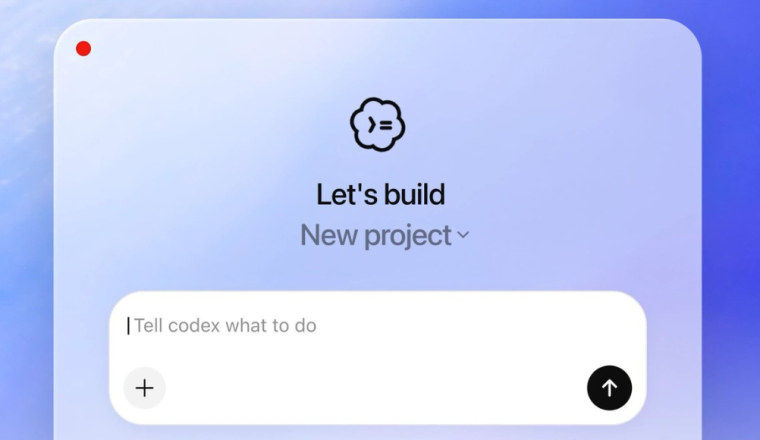
OpenAI is now taking a significant step forward. On Monday, the company launched a new macOS app for Codex, designed to fully embrace modern agentic workflows.

The new app supports:

  • Multiple AI agents working in parallel
  • Advanced agent skills and shared state
  • Modern, flexible workflows inspired by the last year of experimentation in AI coding tools

This release follows closely on the heels of GPT-5.2-Codex, OpenAI’s most powerful coding model to date, launched less than two months ago. The company clearly hopes this combination of power and usability will persuade developers currently using Claude Code to switch.

“If you really want to do sophisticated work on something complex, 5.2 is the strongest model by far,”
— Sam Altman, CEO of OpenAI

Altman also acknowledged that raw capability isn’t enough — usability matters. The new macOS app aims to make that power easier and more flexible to access.

New Features Designed for Real Developers

Beyond raw performance, the Codex macOS app introduces features aimed at matching — or even surpassing — competing tools:

  • Background automations that run on a schedule
  • A review queue for completed tasks
  • Customizable agent personalities, ranging from pragmatic to empathetic, to suit different working styles

These features are designed to reduce context switching and help developers stay focused on higher-level thinking.

For OpenAI, the biggest advantage isn’t just intelligence — it’s speed.

“You can use this from a clean sheet of paper to build something genuinely sophisticated in just a few hours,” Altman explained.
“As fast as I can type new ideas, that’s the limit of what can get built.”

This vision captures where software development is heading: a future where human creativity sets the pace, and AI handles the heavy lifting.

What do you think — will fully agentic coding tools replace traditional development workflows, or will human-AI collaboration always need a strong human hand at the center?

Microsoft Unveils Fine-Tuning for Phi-3

Microsoft has been a key supporter and partner of OpenAI, but it’s clear that the tech giant is not content to let OpenAI dominate the generative AI landscape. In a significant move, Microsoft has introduced a new way to fine-tune its Phi-3 small language model without the need for developers to manage their own servers, and it’s available for free initially.

What is Phi-3?

It is a 3 billion parameter model launched by Microsoft in April. It serves as a low-cost, enterprise-grade option for third-party developers looking to build new applications and software. Despite its smaller size compared to other leading language models, Its performs on par with OpenAI’s GPT-3.5 model. It is designed for coding, common sense reasoning, and general knowledge tasks, making it an affordable and efficient choice for developers.

The Phi-3 Family

The Phi-3 family includes six models with varying parameters and context lengths, ranging from 4,000 to 128,000 tokens per input. Costs range from $0.0003 to $0.0005 per 1,000 input tokens, equating to $0.3 to $0.9 per 1 million tokens. This makes a cost-effective alternative to OpenAI’s GPT-4o mini.

Serverless Fine-Tuning

Microsoft’s new Models-as-a-Service (serverless endpoint) in its Azure AI development platform allows developers to fine-tune Phi-3-small without managing infrastructure. Phi-3-vision, capable of handling imagery inputs, will soon be available via a serverless endpoint as well. For custom-tuned models, Phi-3-mini and Phi-3-medium can be fine-tuned with third-party data.

Benefits and Use Cases

Phi-3 models are ideal for various scenarios, such as learning new skills, improving response quality, and more. For instance, Khan Academy uses a fine-tuned Phi-3 model to benchmark its Khanmigo for Teachers, powered by Microsoft’s Azure OpenAI Service.

Pricing and Competition

Serverless fine-tuning of Phi-3-mini-4k-instruct starts at $0.004 per 1,000 tokens ($4 per 1 million tokens). This positions Microsoft as a strong competitor to OpenAI, which recently offered free fine-tuning of GPT-4o mini for certain users.

Unveiling the Stack Overflow 2024 Developer Survey

In a revealing snapshot of the global software development ecosystem, the developer knowledge platform Stack Overflow has released a new report that delves into the intricate relationship between artificial intelligence (AI) and the coding community. The Stack Overflow 2024 Developer Survey provides a wealth of insights into how generative AI (gen AI) is reshaping the tech landscape and its impact on developers worldwide.

Key Findings from the 2024 Developer Survey

Stack Overflow’s 2024 Developer Survey is based on responses from more than 65,000 developers across 185 countries. This extensive survey highlights the following key points:

  • AI Tool Usage: AI tool usage among developers increased to 76% in 2024, up from 70% in 2023.
  • AI Favorability: Despite increased usage, AI favorability decreased from 77% to 72%.
  • Trust in AI: Only 43% of respondents trust the accuracy of AI tools.
  • Productivity Boost: 81% of developers cite increased productivity as the top benefit of AI tools.
  • Ethical Concerns: Misinformation emerges as the top AI-related ethical concern (79%).
  • Job Security: 70% of professional developers don’t see AI as a threat to their jobs.

The Role of Gen AI in the Developer Community

Increasing Developer Numbers

Contrary to some fears that gen AI might replace developers, it appears that gen AI is actually increasing the number of developers rather than reducing the need for them. Ryan Polk, Chief Product Officer at Stack Overflow, believes that gen AI will democratize coding and significantly grow the developer community.

Enhancing Developer Productivity

Gen AI coding tools are seen as beneficial to developers in their daily tasks. AI-powered code generators, for instance, can reduce the time spent on boilerplate code, allowing developers to focus on more complex problems. Polk describes this as a “Better Together” approach, where gen AI tools complement resources like Stack Overflow to provide a powerful combination.

Trust and Ethical Concerns

Declining Favorability

One of the declining metrics in the 2024 report is the favorability of gen AI tools. In 2023, 77% of respondents had a favorable view of these tools, which fell to 72% in 2024. Senior analyst Erin Yepis suggests that more developers trying these tools and being disappointed in their experiences might be a contributing factor.

Trust Issues

A significant concern among developers is the lack of trust in gen AI tools, primarily due to AI hallucination issues. The top ethical concerns include AI’s potential to spread misinformation (79%), missing or incorrect attribution for sources of data (65%), and bias that doesn’t represent a diversity of viewpoints (50%).

The Role of Stack Overflow

Stack Overflow and its community play a crucial role in addressing trust issues in gen AI. Polk emphasizes that user trust in data, technology, and community knowledge is vital for AI’s future success. Stack Overflow’s partnerships with AI and cloud companies, such as Google Cloud and OpenAI, aim to set new standards with vetted, trusted, and accurate data.

Conclusion

The 2024 Developer Survey by Stack Overflow reveals a complex yet promising landscape where gen AI and developers coexist and collaborate. While there are challenges related to trust and ethical concerns, the potential for increased productivity and growth in the developer community is significant. As gen AI continues to evolve, the collaboration between AI tools and developer communities like Stack Overflow will be essential in shaping a responsible and innovative future for software development.

ElevenLabs New AI Voice Isolator

ElevenLabs, the AI voice startup known for its voice cloning, text-to-speech, and speech-to-speech models, has just launched a new tool: an AI Voice Isolator. Now available on the ElevenLabs platform, this tool allows creators to remove unwanted ambient noise and sounds from any content, including films, podcasts, and YouTube videos.

A New Tool in the Creative Arsenal

The AI Voice Isolator arrives shortly after ElevenLabs released its Reader app. While the tool is free to use with some limitations, it’s worth noting that enhancing speech quality is not a novel capability. Many other providers, including Adobe, offer similar tools. However, the true test will be how well Voice Isolator performs compared to these existing solutions.

How Does the AI Voice Isolator Work?

Creators often face the challenge of background noise when recording content like films, podcasts, or interviews. These noises can interfere with the final output, diminishing the quality of the recorded speech. Traditional solutions, such as using microphones with ambient noise cancellation, can be costly and out of reach for early-stage creators with limited resources.

This is where the AI Voice Isolator steps in. During the post-production stage, users upload the content they want to enhance. The tool then processes the file, detects and removes unwanted noise, and extracts clear dialogue. ElevenLabs claims the product can deliver speech quality comparable to studio recordings. In a demo, the company’s head of design, Ammaar Reshi, showcased how the tool effectively removed the noise of a leaf blower, leaving crystal-clear speech.

Real-World Testing

We conducted three tests to evaluate the Voice Isolator’s real-world applicability. In the first test, we spoke three separate sentences with different background noises. The other two tests involved sentences with a mix of various noises occurring randomly.

In every case, the tool processed the audio within seconds. It successfully removed noises like door openings and closings, table banging, clapping, and household item movements, extracting clear speech without distortion. However, it struggled with wall banging and finger snapping sounds.

Limitations and Future Improvements

Sam Sklar, who handles growth at ElevenLabs, noted that the tool does not currently work on music vocals, although users are encouraged to experiment with it.

While the AI Voice Isolator’s ability to remove irregular background noise is impressive, there is still room for improvement. Ongoing enhancements are expected, as with other tools. However, details about the underlying models powering the tool and whether recordings are used for training remain undisclosed. Users can opt-out of data use for training via a form linked in the company’s privacy policy.

Access and Pricing

Currently, the Voice Isolator is available only through the ElevenLabs platform, with plans to open API access in the coming weeks. Free access is available with certain usage limits—10k characters per month, translating to approximately 10 minutes of audio per month. For larger audio files, paid plans start at $5/month.

Nvidia Unveils New RTX Technology to Power AI Assistants and Digital Humans

Nvidia is once again pushing the boundaries of technology with its latest RTX advancements, designed to supercharge AI assistants and digital humans. These innovations are now integrated into the newest GeForce RTX AI laptops, setting a new standard for performance and capability.

Introducing Project G-Assist

At the forefront of Nvidia’s new technology is Project G-Assist, an RTX-powered AI assistant demo that provides context-aware assistance for PC games and applications. This innovative technology was showcased with ARK: Survival Ascended by Studio Wildcard, illustrating its potential to transform gaming and app experiences.

Nvidia NIM and the ACE Digital Human Platform

Nvidia also launched its first PC-based Nvidia NIM (Nvidia Inference Microservices) for the Nvidia ACE digital human platform. These announcements were made during CEO Jensen Huang’s keynote at the Computex trade show in Taiwan. Nvidia NIM enables developers to reduce deployment times from weeks to minutes, supporting natural language understanding, speech synthesis, and facial animation.

The Nvidia RTX AI Toolkit

These advancements are supported by the Nvidia RTX AI Toolkit, a comprehensive suite of tools and SDKs designed to help developers optimize and deploy large generative AI models on Windows PCs. This toolkit is part of Nvidia’s broader initiative to integrate AI across various platforms, from data centers to edge devices and home applications.

New RTX AI Laptops

Nvidia also unveiled new RTX AI laptops from ASUS and MSI, featuring up to GeForce RTX 4070 GPUs and energy-efficient systems-on-a-chip with Windows 11 AI PC capabilities. These laptops promise enhanced performance for both gaming and productivity applications.

Advancing AI-Powered Experiences

According to Jason Paul, Vice President of Consumer AI at Nvidia, the introduction of RTX Tensor Core GPUs and DLSS technology in 2018 marked the beginning of AI PCs. With Project G-Assist and Nvidia ACE, Nvidia is now pushing the boundaries of AI-powered experiences for over 100 million RTX AI PC users.

Project G-Assist in Action

AI assistants like Project G-Assist are set to revolutionize gaming and creative workflows. By leveraging generative AI, Project G-Assist provides real-time, context-aware assistance. For instance, in ARK: Survival Ascended, it can help players by answering questions about creatures, items, lore, objectives, and more. It can also optimize gaming performance by adjusting graphics settings and reducing power consumption while maintaining performance targets.

Nvidia ACE NIM: Powering Digital Humans

The Nvidia ACE technology for digital humans is now available for RTX AI PCs and workstations, significantly reducing deployment times and enhancing capabilities like natural language understanding and facial animation. At Computex, the Covert Protocol tech demo, developed in collaboration with Inworld AI, showcased Nvidia ACE NIM running locally on devices.

Collaboration with Microsoft: Windows Copilot Runtime

Nvidia and Microsoft are working together to enable new generative AI capabilities for Windows apps. This collaboration will allow developers to access GPU-accelerated small language models (SLMs) that enable retrieval-augmented generation (RAG) capabilities. These models can perform tasks such as content summarization, content generation, and task automation, all running efficiently on Nvidia RTX GPUs.

The RTX AI Toolkit: Faster and More Efficient Models

The Nvidia RTX AI Toolkit offers tools and SDKs for customizing, optimizing, and deploying AI models on RTX AI PCs. This includes the use of QLoRa tools for model customization and Nvidia TensorRT for model optimization, resulting in faster performance and reduced RAM usage. The Nvidia AI Inference Manager (AIM) SDK simplifies AI integration for PC applications, supporting various inference backends and processors.

AI Integration in Creative Applications

Nvidia’s AI acceleration is being integrated into popular creative apps from companies like Adobe, Blackmagic Design, and Topaz. For example, Adobe’s Creative Cloud tools are leveraging Nvidia TensorRT to enhance AI-powered capabilities, delivering unprecedented performance for creators and developers.

RTX Remix: Enhancing Classic Games

Nvidia RTX Remix is a platform for remastering classic DirectX 8 and 9 games with full ray tracing and DLSS 3.5. Since its launch, it has been used by thousands of modders to create stunning game remasters. Nvidia continues to expand RTX Remix’s capabilities, making it open source and integrating it with popular tools like Blender and Hammer.

AI for Video and Content Creation

Nvidia RTX Video, an AI-powered super-resolution feature, is now available as an SDK for developers, allowing them to integrate AI for upscaling, sharpening, and HDR conversion into their applications. This technology will soon be available in video editing software like DaVinci Resolve and Wondershare Filmora, enabling video editors to enhance video quality significantly.

Conclusion

Nvidia’s latest advancements in RTX technology are set to revolutionize AI assistants, digital humans, and content creation. By providing powerful tools and capabilities, Nvidia continues to push the boundaries of what AI can achieve, enhancing user experiences across gaming, creative applications, and beyond.

Stay updated with the latest in AI and RTX technology by subscribing to our blog and sharing this post on social media. Join the conversation and explore the future of AI with Nvidia!

What is Artificial Intelligence?

Artificial Intelligence (AI) has become a buzzword in recent years, but what does it really mean? This blog post will delve into the basics of AI, how it works, what it can and can’t do, potential pitfalls, and some of the most intriguing aspects of this technology.

Introduction to Artificial Intelligence (AI)

Artificial Intelligence, commonly referred to as AI, is the simulation of human intelligence in machines. These machines are programmed to think and learn like humans, capable of performing tasks that typically require human intelligence such as visual perception, speech recognition, decision-making, and language translation. AI can be found in various applications today, from self-driving cars to voice-activated assistants like Siri and Alexa.

The Inner Workings of AI and Its Comparison to a Hidden Octopus

AI systems work by using algorithms and large datasets to recognize patterns, make decisions, and improve over time. These systems are typically powered by machine learning, a subset of AI that enables machines to learn from experience. Here’s a simplified breakdown of how AI works: Data is collected from various sources, then processed to be clean and usable. Algorithms are applied to this data to identify patterns and make predictions. The AI system is trained using a training dataset, improving its accuracy over time through learning. Finally, the trained AI system is deployed and continues to learn and improve based on feedback.

Think of AI as a secret octopus with many tentacles, each representing a different capability. Just as an octopus uses its tentacles to explore and interact with its environment, AI uses its various functions (like vision, speech, and decision-making) to understand and influence the world around it. The “secret” part comes from the fact that, much like an octopus’s intricate movements can be hard to decipher, the inner workings of AI algorithms can be complex and opaque, often functioning in ways that are not immediately understandable to humans.

What AI Can (and Can’t) Do

AI can analyze vast amounts of data quickly and accurately, recognize patterns, and make predictions based on this data. It can automate repetitive tasks, improving efficiency and reducing errors. Through natural language processing (NLP), AI can understand and generate human language, enabling applications like chatbots and language translators. AI can also identify objects in images and understand spoken language, powering technologies like facial recognition and virtual assistants. However, AI lacks the ability to understand context in the way humans do and cannot genuinely understand or replicate human emotions. While AI can generate content, it does not possess true creativity or original thought. Additionally, AI cannot make ethical decisions as it does not understand morality.

How AI Can Go Wrong

AI systems are not infallible and can go wrong in several ways. AI can perpetuate and amplify biases present in training data, leading to unfair or discriminatory outcomes. Incorrect data or flawed algorithms can result in erroneous predictions or decisions. AI systems can also be susceptible to hacking and malicious manipulation. Over-reliance on AI can lead to the erosion of human skills and judgment.

The Importance (and Danger) of Training Data

Training data is crucial for AI systems as it forms the foundation upon which they learn and make decisions. High-quality, diverse training data helps create accurate and reliable AI systems. However, poor-quality or biased training data can lead to inaccurate, unfair, or harmful AI outcomes. Ensuring that training data is representative and free from bias is essential to developing fair and effective AI systems.

How a ‘Language Model’ Makes Images

Language models, like OpenAI’s GPT-3, are primarily designed to process and generate text. However, they can also be used to create images when integrated with other AI models. The language model receives a text prompt describing the desired image. The model interprets the text and generates a detailed description of the image. A connected image-generating AI, such as DALL-E, uses the description to create an image. This process involves complex neural networks and vast datasets to accurately translate textual descriptions into visual representations.

What About AGI Taking Over the World?

Artificial General Intelligence (AGI) refers to a level of AI that can understand, learn, and apply knowledge across a wide range of tasks at a human-like level. While AGI is a fascinating concept, it remains largely theoretical. AGI does not yet exist and is a long way from being realized. The idea of AGI taking over the world is a popular theme in science fiction, but it raises legitimate concerns about control, ethics, and safety. Ensuring that AGI, if developed, is aligned with human values and controlled appropriately is crucial to preventing potential risks.

Conclusion

AI is a powerful technology with the potential to revolutionize various aspects of our lives. Understanding how it works, its capabilities and limitations, and the importance of training data is crucial to harnessing its benefits while mitigating its risks. As AI continues to evolve, it is essential to stay informed and engaged with its development to ensure it serves humanity positively and ethically.